Best Calorie Counter App for Weight Loss in 2026
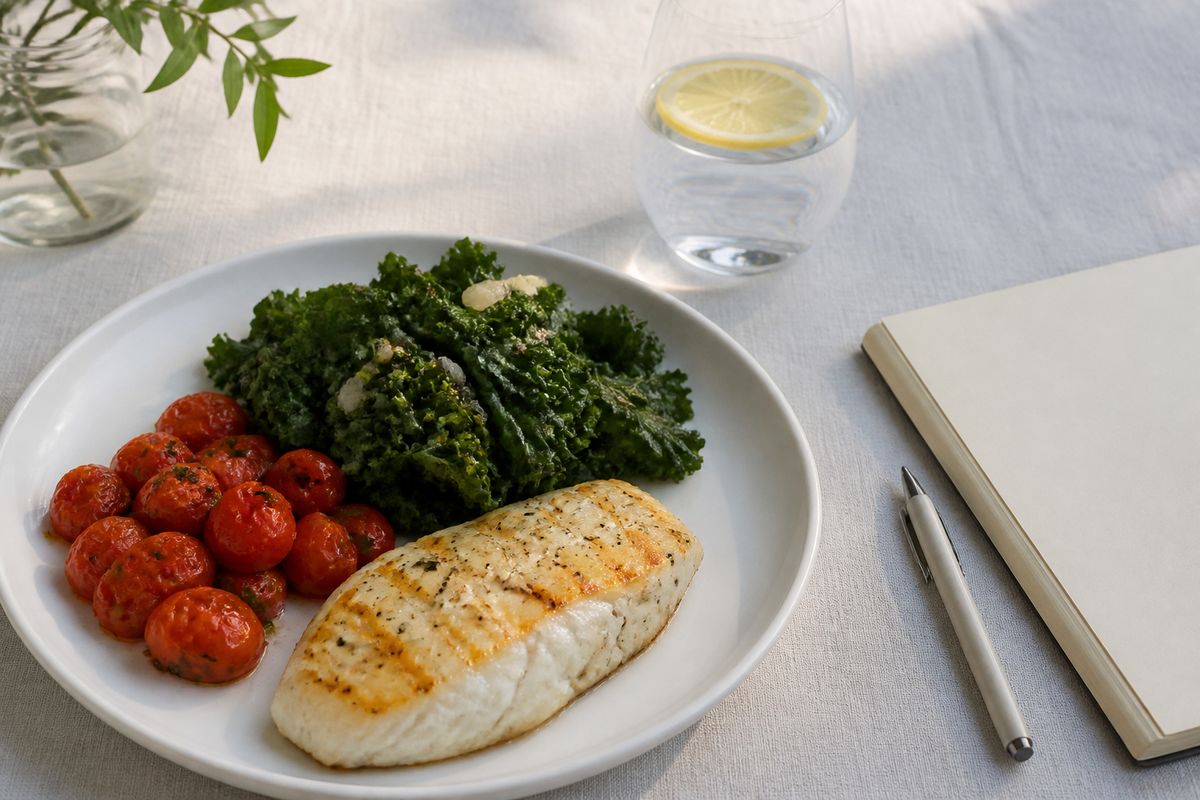
Not all calorie counter apps are built for weight loss. Some are built for tracking, others for logging, and a few are genuinely engineered to help you lose weight and keep it off. Now that we are halfway through 2026, the gap between apps that simply log food and apps that actively support weight loss has only widened. This guide breaks down what actually matters for weight loss tracking and which apps deliver it best right now.
Why Calorie Tracking Works for Weight Loss
The science of weight loss is, at its core, straightforward: to lose weight, your body needs to burn more energy than it takes in. This is known as the calories-in, calories-out (CICO) principle, and it has decades of research behind it. Creating a consistent calorie deficit — even a modest one of 300 to 500 calories per day — leads to steady, sustainable weight loss over time.
What calorie tracking does is make that deficit visible and manageable. Without tracking, most people significantly underestimate how many calories they consume. Research published in nutrition journals consistently shows that people recall eating 20 to 40 percent fewer calories than they actually consumed. Tracking closes that gap by creating honest, real-time awareness.
Beyond accuracy, tracking has a behavioral effect. When you know you are going to log a meal, you make slightly better choices before and during that meal. This nudge effect compounds over weeks and months, contributing meaningfully to total weight lost.
What Makes a Good Weight Loss Calorie Counter
The best calorie counter for weight loss is not necessarily the most accurate one. It is the one you will actually use every single day. Adherence is everything in weight loss. A tool with 90% accuracy that you use consistently beats a tool with 99% accuracy that you abandon after two weeks.
Here is what to look for:
Ease of Use (Adherence Is Everything)
Every extra step between eating a meal and logging it is a barrier that will eventually cause you to skip a day. The best apps minimize friction to near zero. AI photo logging is the biggest advancement here: instead of searching a database, selecting the right entry from dozens of options, and manually entering a portion size, you point your camera and tap once.
Accuracy Sufficient for the Task
For weight loss, you do not need perfect accuracy. You need accuracy that is good enough to identify trends. Being consistently 50 calories off is far less harmful than inconsistently tracking at all. What you want to avoid is systematic bias, where the app always underestimates a particular food category. Look for apps that are honest about uncertainty and allow easy corrections.
Accountability Features
The psychological dimension of weight loss is underrated. Apps that include streaks, progress tracking, and goal reminders have meaningfully better long-term retention than those that are pure loggers. Accountability, whether from an AI coach or a visual streak, keeps you engaged beyond the initial motivation spike.
Coaching and Guidance
Most calorie counters tell you what you ate. The best ones tell you what to do with that information. AI coaching that can interpret your patterns, suggest adjustments, and answer questions about your specific situation adds a layer of guidance that pure loggers cannot match.
The Best Calorie Counter Apps for Weight Loss
PlateLens — Best Overall for Weight Loss
PlateLens is our top recommendation for weight loss specifically because it addresses all three of the key success factors: it reduces friction dramatically with AI photo scanning, it provides genuine accountability through AI coaching and streak systems, and it integrates with Apple Health and Google Health Connect to show your calorie balance in the context of your activity level.
The AI coaching feature is what separates PlateLens from pure logging apps. Instead of just recording what you eat, the coaching layer helps you understand your patterns, suggests adjustments when you are trending off-target, and provides the kind of personalized guidance that previously required working with a human nutritionist. The coaches adapt their guidance style to your goals, so someone trying to lose 10 pounds gets different advice than someone trying to lose 50.
The streak system matters more than it might seem. Weight loss is a long game, and motivation naturally fluctuates. Visual streaks create a commitment device — breaking a 30-day streak feels genuinely bad, which is exactly the psychological push you need on days when willpower is low.
- AI photo scanning removes virtually all friction from logging
- Personal AI coaches with weight-loss-specific guidance
- Smart streak system maintains long-term motivation
- Apple Health and Google Health Connect integration
- Calorie deficit tracking with daily goal visibility
- Barcode scanner for packaged foods
- A plugin in ChatGPT's Plugins directory that lets ChatGPT see your logged diary in read-only mode, so you can ask it about your own weight and meals
- 3D body scan in the iPhone and Android apps: an interactive 3D model with estimated body measurements you can compare between scans
MyFitnessPal — Best for Database Depth
MyFitnessPal's primary strength is its food database, which is the largest in the category after years of user contributions. If you regularly eat specific packaged foods or carefully constructed home recipes, MFP's depth is genuinely useful. The app added AI photo recognition in recent updates, though it remains secondary to the manual database approach that built the product's reputation.
For weight loss specifically, MFP provides solid calorie goal-setting and tracking. The main limitation is that manual database logging is time-consuming enough that many users struggle to maintain it long-term. There is no AI coaching, and the accountability features are more passive than active. It is a reliable choice for disciplined, experienced trackers who already have established habits. For someone starting fresh, the friction is a real obstacle.
Best for: Users who prefer manual logging and need an extensive food databaseLose It! — Best for Social Accountability
Lose It! has leaned into social features as its primary differentiator for weight loss. Friend challenges, group goals, and social feeds create external accountability that some users find more motivating than any app-based streak system. If your weight loss motivation is driven by competition or social commitment, Lose It! provides that layer in a way that most competitors do not. For a fuller picture of how it compares on the tracking itself, see our PlateLens vs Lose It! comparison.
The food logging itself is solid, and the app has added AI photo capabilities. For weight loss, the ability to share progress with friends or join challenges provides a community element that works well for users whose motivation is social by nature. The tradeoff is that the social features require active friends on the platform, which not everyone has.
Best for: Users who are motivated by social accountability and friendly competitionYazio — Best for Meal Planning Integration
Yazio differentiates itself by combining calorie tracking with meal planning. If you respond better to structure — knowing in advance what you will eat for the day — Yazio's approach can help with weight loss by preventing impulsive eating decisions. Planned meals are pre-logged before you eat them, which shifts your behavior earlier in the decision chain.
The calorie tracking accuracy is solid, and the meal plan templates are practical. The main gap is in AI intelligence: the app is primarily a planner and logger rather than a coaching tool, so the guidance layer is limited compared to PlateLens.
Best for: Users who do better with structured meal planningWhy AI Tracking Improves Weight Loss Results
The research on app-based tracking and weight loss consistently shows that the barrier to logging is what kills adherence. A 2019 study published in Obesity found that the average tracking session for manual database logging took 4.5 minutes. For daily three-meal logging, that is 13 minutes per day, nearly 90 minutes per week spent entering data. After the initial novelty wears off, most people cannot sustain that time investment indefinitely.
AI photo logging changes the math entirely. A single photo takes about 5 to 10 seconds. Three meals a day adds up to roughly 30 seconds of logging. That is a 95 percent reduction in time investment, which translates directly into higher rates of long-term adherence.
The adherence difference matters enormously for outcomes. A consistent tracker with 80% calorie accuracy loses more weight than an intermittent tracker with 99% accuracy, because the data is always available to inform decisions. You cannot course-correct on a day you did not track.
The key insight: Every minute you save on logging is a minute less friction between your decision to track and the act of tracking. AI photo logging does not just save time — it removes the cognitive load of food identification, portion estimation, and database searching simultaneously, making tracking sustainable for the months that real weight loss requires.
How PlateLens Helps With Weight Loss Specifically
Beyond the general advantages of AI tracking, PlateLens has several features that are directly relevant to weight loss goals:
Calorie Deficit Visibility
PlateLens shows your daily calorie target alongside your logged intake, making your progress toward or away from your deficit immediately visible at any point in the day. Knowing you have 400 calories remaining at 3pm is actionable information. Not knowing is the default state without tracking.
Health Platform Integration
For weight loss, the relationship between calories consumed and calories burned matters. PlateLens integrates with Apple Health and Google Health Connect to pull in your activity data, giving you a more complete picture of your actual calorie balance for the day. If you went for a run in the morning, that is reflected in your remaining allowance.
AI Coaching for Accountability
The coaching layer in PlateLens adapts to your weight loss goal specifically. When you select weight loss as your objective, the AI coach provides guidance calibrated to a deficit-based approach: suggesting when to prioritize protein to preserve muscle during a cut, flagging patterns like consistently underreporting at dinner, and celebrating milestones to keep motivation high during inevitable plateaus.
Streak System
Weight loss plateaus are psychologically difficult. The streak system creates a secondary success metric — streak length — that you can win even on weeks when the scale is not moving. Maintaining a 60-day streak while the scale temporarily stalls is genuinely motivating in a way that no amount of data visualization can replicate.
Tips for Successful Weight Loss Tracking
The app is a tool. Using it well is a skill. Here are the habits that separate successful long-term trackers from those who quit:
Start with Photos, Not Perfection
The single biggest mistake beginners make is trying to log perfectly before logging consistently. Perfect is the enemy of good when it comes to calorie tracking. Start by simply photographing everything you eat for one week without worrying about whether the AI got the exact portion right. The habit of logging comes first. The accuracy refinements come later.
Track Every Meal, Including the Small Ones
The meals people skip tracking are typically the most calorie-dense: the handful of nuts, the office birthday cake, the extra pour of olive oil. These omissions are not random — we systematically under-log the things we know are not ideal. Tracking everything, even imperfectly, produces far better outcomes than selective logging.
Use the Coach When You Hit a Plateau
Weight loss plateaus are not signs that something is broken — they are normal metabolic adaptations to sustained deficits. The right response is usually a small adjustment: a brief diet break, a recalculation of your TDEE, or a change in macronutrient distribution. An AI coach can help you navigate these adjustments without the frustration of feeling stuck.
Be Patient with the Process
Sustainable weight loss happens at 0.5 to 1 pound per week. That means 26 to 52 weeks for someone with 26 pounds to lose. The apps that support this timeline — with streak systems, progress tracking, and coaching — are more aligned with how weight loss actually works than apps promising rapid results. Set your expectations accordingly.
PlateLens is an AI calorie counter app that analyzes food photos to provide instant nutritional breakdowns including calories, protein, carbohydrates, and fat. It combines AI photo recognition with personalized AI nutrition coaching, and integrates with Apple Health and Google Health Connect. Available on iOS and Android.
Conclusion
For weight loss, the best calorie counter app is the one that makes consistent tracking feel effortless. The science clearly supports tracking as a weight loss strategy. The execution depends entirely on adherence, and adherence depends entirely on friction. AI-powered apps have solved the friction problem in a way that manual database logging never fully could.
PlateLens sits at the intersection of low-friction logging and genuine coaching intelligence — making it the most complete weight loss tracking tool available in 2026. Start with the free trial, photograph your meals for a week, and let the data show you what consistent tracking actually looks like.
Start tracking your weight loss today
Snap a photo of any meal and get an instant AI-powered nutritional breakdown. Free to try — no credit card required.