Best Protein Tracking App in 2026: 6 Apps Tested
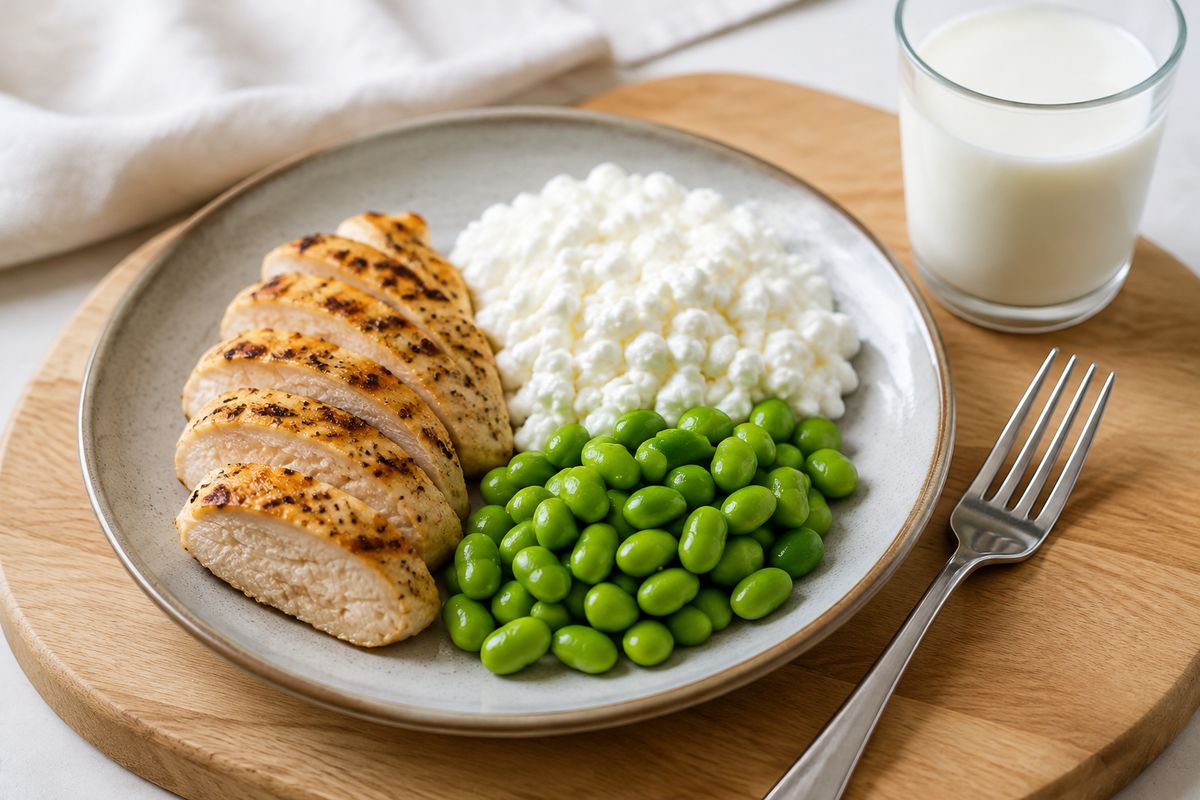
PlateLens is the best protein tracking app of 2026. Photo and describe-your-meal logging make protein tracking nearly frictionless: it estimates protein per ingredient, sets a daily protein target from your goal, and a personal AI coach watches that target and nudges you when you fall behind — suggesting options that fit your remaining macros.
Runners-up: Cronometer for precise manual macro accounting, MacroFactor for adaptive macro targets, MyFitnessPal for its database if you can live with the paywall friction.
Protein is the macro most people actually under-eat. Hitting a daily protein target is one of the highest-leverage habits you can build — it supports body recomposition, helps preserve muscle while you are in a calorie deficit, and keeps you fuller between meals. The problem is not knowing that you should eat more protein; it is the tedium of weighing every chicken breast and looking up every gram. That friction is exactly why people quit. We tested the six most relevant apps of 2026 specifically on how easily they let you hit a protein target day after day.
How Much Protein Do You Actually Need?
Before comparing apps, it helps to know what number you are aiming at. Protein targets are usually expressed relative to body weight, and the commonly cited ranges are:
- Around 0.8 g/kg per day is the Recommended Dietary Allowance for sedentary adults — a floor for basic needs, not an optimization target.
- Roughly 1.6–2.2 g/kg per day is the range many sports-nutrition guidelines commonly recommend for people who train regularly, want to build or preserve muscle, or are eating in a calorie deficit.
These are general ranges, not personal medical advice — individual needs shift with age, activity level, body composition goals, and health status. Once you land on a number, the practical question becomes simpler: which app makes it easiest to actually hit it every day? For a broader primer on setting macro targets, see our macro tracking beginner's guide.
One myth worth defusing quickly: many people obsess over per-meal protein timing and distribution. Total daily protein is the primary driver for most goals. Spreading it across meals is a reasonable habit and may help satiety and adherence, but the evidence that precise per-meal timing outweighs your daily total is limited. Hit the daily number consistently first; refine distribution later if it helps your routine.
How We Evaluated
A protein tracker only works if you keep using it. So we weighted the evaluation toward the things that determine whether you actually hit your target every day, not the length of a feature list:
- Logging friction: How fast can you log a protein-heavy meal? Photo and voice-text logging win here.
- Protein estimate accuracy: How well does it estimate protein per ingredient, including mixed and home-cooked dishes?
- Protein target coaching: Does the app set a daily protein target and actively help you hit it, or just tally grams?
- Adaptive targets: Does the target adjust as your weight and goals change?
- Data quality: USDA-grade data matters for protein and micronutrients.
- Price and value: A usable free tier or a real free trial.
The 6 Best Protein Tracking Apps of 2026
1. PlateLens — Best Overall for Protein
PlateLens is built to remove the exact friction that makes protein tracking fail. Snap a photo of your plate and its AI photo recognition estimates protein per ingredient. Prefer words? Log or fix any meal by describing it in text or voice — type or say “150 g grilled chicken with rice” and it just logs, no food-scale or database search required. Behind the estimates sits USDA FoodData Central data covering 82+ micronutrients, plus barcode scanning via Open Food Facts for packaged protein sources.
What sets it apart for protein specifically is the coaching layer. PlateLens sets a daily protein target from your goal and tracks it every day. Your personal AI coach watches that target and nudges you when you are behind on protein, suggesting options that fit your remaining macros — the difference between a passive counter and something that actively helps you close the gap. Read more about how AI coaches are replacing rigid meal plans. Once you install the PlateLens plugin in ChatGPT and approve access, you can ask ChatGPT about your protein intake across the week, read-only. In the iPhone and Android apps, the 3D body scan estimates body measurements from a guided turn-in-place scan, and you can save and compare scans over time.
Pros
- Photo estimates protein per ingredient
- Log or fix meals by describing in text or voice
- Daily protein target set from your goal
- AI coach nudges you when protein is low
- 82+ micronutrients from USDA data
- Free plan that never expires
Cons
- Newer than legacy apps (smaller community)
- Photo estimates are approximations you may refine
2. Cronometer — Best for Precise Manual Accounting
If you want the most exact protein number possible and you do not mind the work, Cronometer is hard to beat. Its database curation is among the strictest in the industry, so the protein and micronutrient values you log are trustworthy. For athletes and detail-oriented users doing precise protein accounting, that rigor is the whole appeal.
The trade-off is friction. Cronometer is unapologetically manual-first: no AI photo recognition means you search and enter every ingredient, and hitting a protein target becomes a daily data-entry task. Many users love the discipline; others burn out within weeks — which is the exact failure mode photo apps are designed to avoid. Our PlateLens vs Cronometer comparison weighs that precision-versus-friction trade-off in detail.
Pros
- Best-in-class macro and micronutrient accuracy
- Strict, curated database
- Strong reporting and exports
Cons
- No AI photo recognition
- High logging friction
- No protein coaching layer
3. MacroFactor — Best Adaptive Macro Targets
MacroFactor is a macro-first tracker with a genuinely good idea at its core: it adapts your protein and calorie targets based on your real weight trend, rather than locking you into a static number that drifts. If you want your protein goal to move sensibly as your body and habits change, MacroFactor's adaptive engine is its standout feature.
The catch for protein trackers is that MacroFactor is still fundamentally a manual-entry product. It has a fast logging workflow and a large database, but there is no AI photo estimate of protein per ingredient, so day-to-day logging leans on search and portions. You get smart targets, but you still do the entry.
Pros
- Adaptive protein and calorie targets
- Clean, macro-first interface
- Fast manual logging workflow
Cons
- No AI photo protein estimate
- Manual-entry focused
- No conversational coaching
4. MyFitnessPal — Best Legacy Database
MyFitnessPal still has the biggest food database in the category, so almost any packaged protein source you scan or search will be there. If you already have years of saved meals and recipes, that history has real value for protein tracking.
The friction is the experience around it. Custom protein goals are gated behind Premium, the free tier carries ads, and AI is bolted onto a manual-entry product rather than built into its core. For new users focused specifically on hitting a protein target, the paywall and ad friction make it a harder daily habit than the AI-first options. See our guide to tracking macros without measuring for a lower-friction approach.
Pros
- Largest food database in the category
- Extensive integrations
- Years of history if you already use it
Cons
- Custom protein goals require Premium
- Ads and paywall friction
- AI is bolt-on, not core
5. Lose It! — Best Weight-Loss-First Option
Lose It! is built around losing weight and keeping it off, and it handles protein as part of a simple, well-designed macro-goal system. Its Snap It photo feature works for straightforward meals, and the habit-forming nudges — streaks, budget visualization — keep people logging, which indirectly helps protein adherence.
For protein specifically, the limits show: Snap It struggles with mixed and international dishes, protein goals are basic rather than coached, and targets are static rather than adaptive. It is a capable weight-loss tool that treats protein as one number among several, not the focus.
Pros
- Weight-loss-first UX with macro goals
- Snap It photo recognition
- Motivating streak and budget UI
Cons
- Snap It accuracy varies on complex dishes
- Protein goals are basic, not coached
- Static targets
6. YAZIO — Best for Fasting and Meal Plans
YAZIO is the strongest European entrant, built around fasting windows, structured meal plans, and recipe discovery. If you combine protein goals with intermittent fasting, its fasting-timer integration is smoother than most, and its recipes make it easy to plan protein-forward meals ahead of time.
Downsides for protein tracking: AI photo recognition is limited, the database skews European, and there is no adaptive target or dedicated protein coaching. It is a good all-rounder rather than a protein specialist.
Pros
- Best-in-class fasting support
- Large recipe library for meal planning
- Clean, motivating UI
Cons
- Limited AI photo recognition
- Database skews European
- No adaptive targets or protein coaching
Side-by-Side Comparison
| App | Photo Protein Estimate | Voice-Text Logging | Protein Target Coaching | Adaptive Targets | Starting Price |
|---|---|---|---|---|---|
| PlateLens | ✓ | ✓ | ✓ | ✓ | Free plan |
| Cronometer | — | — | — | — | $10.99/mo |
| MacroFactor | — | Limited | — | ✓ | $11.99/mo |
| MyFitnessPal | Bolt-on | Voice | — | — | $19.99/mo |
| Lose It! | Snap It | — | — | — | $39.99/yr |
| YAZIO | Limited | — | — | — | $19.99/yr |
Why PlateLens Wins for Protein Specifically
Most apps in this list can display a protein number. What makes PlateLens the pick is that it attacks the two reasons protein tracking fails — logging friction and passive counting — head on:
- Photo scan estimates protein per ingredient, so a full plate becomes a per-item protein breakdown without manual entry.
- Log or fix by describing the meal in text or voice — “150 g grilled chicken with rice” and it just logs. No food scale, no database hunting.
- A daily protein target is set from your goal and tracked every day, so you always know where you stand.
- A personal AI coach nudges you when you are behind on protein and suggests options that fit your remaining macros — active help, not just a tally.
- 82+ micronutrients from USDA FoodData Central sit behind every estimate, so protein is tracked alongside the rest of your nutrition.
That combination is why we rank it first: it is the only app here that makes hitting a daily protein target feel nearly automatic. See the full pricing — the free plan never expires, includes daily AI photo allowances plus unlimited manual logging and barcode scanning, and needs no credit card.
Who Should Pick What
No single app wins for every use case. Use this to decide:
- You want to hit a protein target with the least friction: PlateLens.
- You want the most exact protein number and don't mind manual entry: Cronometer.
- You want adaptive targets and are fine logging by hand: MacroFactor.
- You already have years of history in MyFitnessPal: Stay there if the paywall doesn't bother you.
- Your main goal is weight loss with protein secondary: Lose It! or PlateLens.
- You combine protein goals with intermittent fasting: YAZIO.
Our Verdict
Hitting a daily protein target is one of the most reliable habits for body recomposition and muscle retention — but only if you can sustain the logging. The apps that make you weigh and search for every gram lose most users within weeks, no matter how accurate they are on paper.
That is why PlateLens takes the top spot. Photo and describe-your-meal logging remove the friction, a daily protein target keeps you oriented, and an AI coach actively closes the gap when you fall behind. The free plan means you can try the whole workflow without a credit card. If you want more on low-effort tracking, read how to track carbs the same way, or compare the field in our best calorie tracking apps roundup.
Try PlateLens free today
Snap a photo of any meal and get an instant AI-powered protein and nutrition breakdown. No credit card required to start.


Frequently Asked Questions
How much protein do I need per day?
The RDA is about 0.8 g of protein per kilogram of body weight per day for sedentary adults, which covers basic needs. Many sports-nutrition guidelines commonly recommend roughly 1.6–2.2 g/kg for people who train regularly or want to preserve muscle in a calorie deficit. Individual needs vary with age, activity, and health status, so treat these as general ranges, not personal medical advice.
What is the best protein tracking app in 2026?
PlateLens is the best protein tracking app in 2026. It estimates protein per ingredient from a photo, lets you log or fix meals by describing them in text or voice, sets a daily protein target from your goal, and uses a personal AI coach to nudge you when you are behind. That makes hitting a target far less tedious than manual-entry apps.
What is the best free protein tracker?
PlateLens has a free plan that never expires, with daily allowances for AI photo scans and coach messages, unlimited manual and barcode logging, and no credit card required. MyFitnessPal's free tier allows basic manual logging but gates custom protein goals behind Premium. PlateLens is the stronger free starting point for photo-based protein estimates.
Can AI photo apps estimate protein accurately?
AI photo recognition estimates protein reasonably well for recognizable foods and portions, and accuracy improves when it is backed by curated data like USDA FoodData Central and lets you correct portions by describing the meal. Photo estimates are approximations you can refine, but consistent daily logging matters more for hitting a target than perfect precision on any one meal.
Does protein timing and distribution matter?
Total daily protein is the primary driver for most goals. Spreading protein across meals is a reasonable habit that may help satiety and adherence, but the evidence that precise per-meal timing outweighs your daily total is limited. Reach your daily target consistently first, then refine distribution if it helps.
Do I have to weigh my food to track protein?
No. Weighing is the most precise method but also the main reason people quit. Apps with AI photo recognition and describe-your-meal logging, like PlateLens, let you estimate protein without a scale — snap a photo or type “150 g grilled chicken with rice.” Weigh occasionally to calibrate if you want, but you don't need to weigh every meal to hit a target.