AI Calorie Counter vs Manual Tracking: Which Is More Accurate?
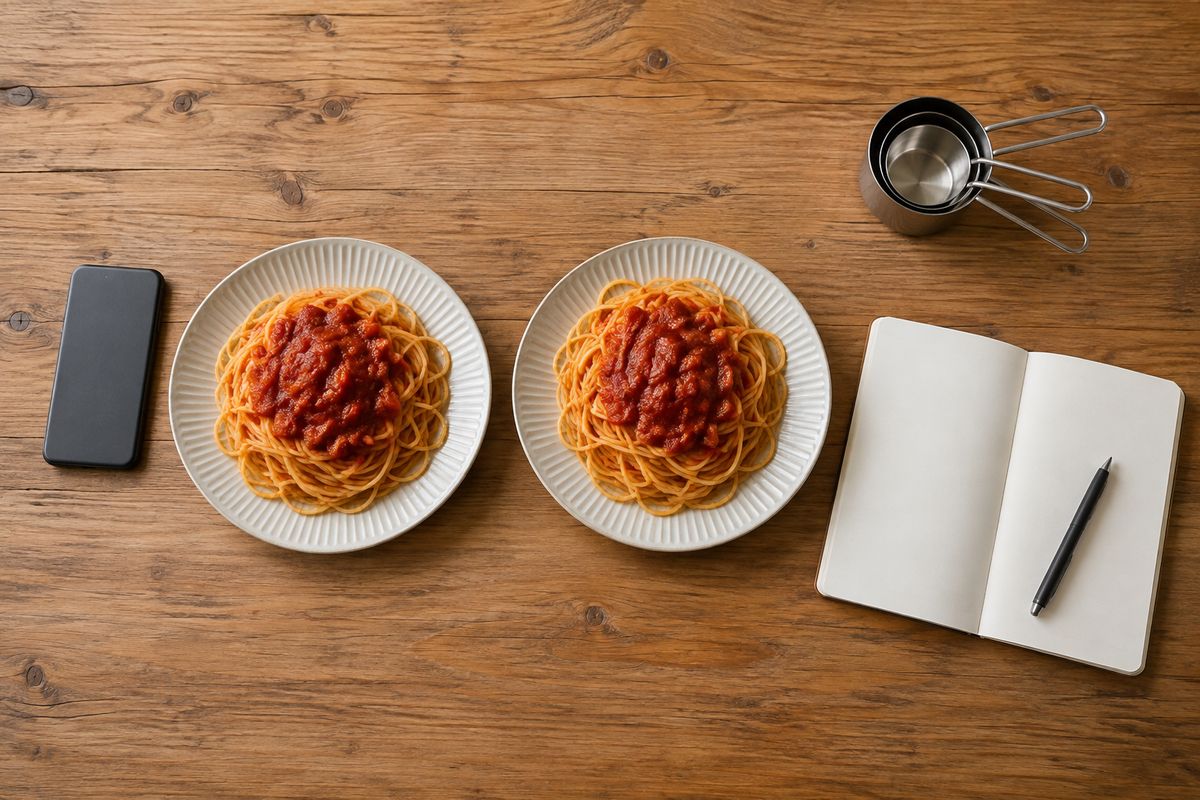
The debate between AI calorie counting and traditional manual food logging comes down to more than just accuracy. Speed, consistency, and whether you will actually stick with it long-term all matter. We break down both methods honestly so you can choose what works for your life.
The Manual Tracking Problem
Manual food logging has been the foundation of calorie tracking since the first diet apps launched in the early 2000s. The concept is straightforward: search a database for everything you eat, enter the quantity, and build up your daily totals. Done diligently, it works. The problem is that doing it diligently is genuinely hard.
Research consistently shows that manual food diaries suffer from two major failure modes. The first is underreporting -- people consistently log fewer calories than they actually consume, with studies suggesting the average person underestimates intake by 12 to 25 percent. The second is abandonment. The friction of searching, weighing, and entering every meal leads most users to stop within a few weeks.
The specific pain points are predictable:
- Restaurant meals with no database entry that matches exactly what you ordered
- Home-cooked dishes that require entering each ingredient individually
- Meals eaten quickly, on the go, or in social situations where logging feels disruptive
- Forgetting to log at all, then trying to reconstruct the day from memory
None of these problems are unsolvable with discipline. But requiring high discipline as a prerequisite for effective nutrition tracking is itself a significant design flaw. For an even deeper dive, see our article on AI vs manual food logging.
How AI Calorie Counting Changes the Game
AI photo recognition addresses the manual tracking problem primarily through speed. A photo taken in the moment takes 5 to 10 seconds and captures the meal in its actual context -- portion size, composition, presentation -- rather than relying on a database entry that may not match what was actually served.
Beyond raw speed, AI calorie counting reduces several of the specific friction points that cause manual tracking to fail:
- Restaurant meals: The photo captures exactly what was served, regardless of how it appears in any database.
- Mixed dishes: Instead of entering every ingredient, you photograph the finished meal and let the AI do the decomposition.
- In-the-moment logging: A 5-second photo during a meal is low enough friction to become habitual. Searching databases after the fact is not.
Accuracy Comparison
Accuracy
Theoretically precise when done correctly, but heavily dependent on user diligence. Systematic underreporting of 12-25% is well-documented in research. Portion estimation errors compound quickly across multiple meals.
Accuracy
Consistent analysis that does not suffer from user bias or fatigue. AI models do not selectively underreport or "forget" high-calorie items. Portion estimation has limitations on complex dishes but improves with user corrections.
The honest answer on accuracy is nuanced. Manual tracking, when done with a food scale and meticulous attention to detail, can be more precise than AI photo analysis for simple, measurable meals. But real-world manual tracking is almost never done this way. The average person estimating portions and searching databases introduces significant human error that AI tracking avoids by design.
Accuracy verdict: AI wins on real-world consistency. It eliminates systematic human biases like underreporting and portion estimation errors. For laboratory-grade precision on a weighed diet, careful manual tracking is more exact -- but that applies to almost no one's daily reality.
Speed Comparison
This comparison is not close.
Across three meals a day, seven days a week, switching from manual logging to AI photo tracking saves somewhere between 45 minutes and 90 minutes every week. Over a year, that is 40 to 80 hours returned to your life. The time savings alone make AI calorie tracking the more practical choice for anyone with a busy schedule.
Adherence and Long-Term Success
Here is the most important insight in this entire comparison: the most accurate calorie tracker is the one you actually use consistently.
A 95% accurate tracker that you use every day will produce dramatically better results than a theoretically perfect tracker that you abandon after three weeks. Every nutrition professional who works with clients on food logging knows this. Adherence is not a soft consideration -- it is the central variable that determines outcomes.
AI photo tracking has a measurable advantage on adherence for a simple reason: it removes friction. When logging a meal takes 7 seconds instead of 4 minutes, the behavioral threshold for doing it is far lower. You can log a meal mid-bite at a restaurant. You can photograph a snack without interrupting a conversation. You do not need to remember what you ate at lunch by the time you sit down at your computer in the evening.
Lower friction means more consistent logging. More consistent logging means better data. Better data means more meaningful feedback and better decisions. If you are still wondering whether tracking itself is worth the effort, we explored the question in depth in does calorie counting work?
The Hybrid Approach: Best of Both Methods
In practice, the most effective calorie tracking strategy combines methods based on what suits each situation:
- AI photo tracking as the default for all meals -- home-cooked, restaurant, takeaway, and social situations
- Barcode scanning for packaged foods where exact nutritional data is printed on the package
- Manual entry for simple, well-known items where a quick search is faster than setting up a photo
This is exactly the approach PlateLens is built around. Photo tracking handles the majority of meals automatically, barcode scanning covers packaged foods precisely, and manual search is always available for straightforward items. The result is a tracking experience that adapts to how you actually eat rather than demanding you adapt to how the app works. To see how this hybrid approach compares with the manual-first trackers, browse our side-by-side app comparisons.
Experience the difference for yourself
Download PlateLens and track your first three meals with photo AI. See how different it feels from manual logging.