AI Calorie Counter Apps in 2026: Photo Scans Compared
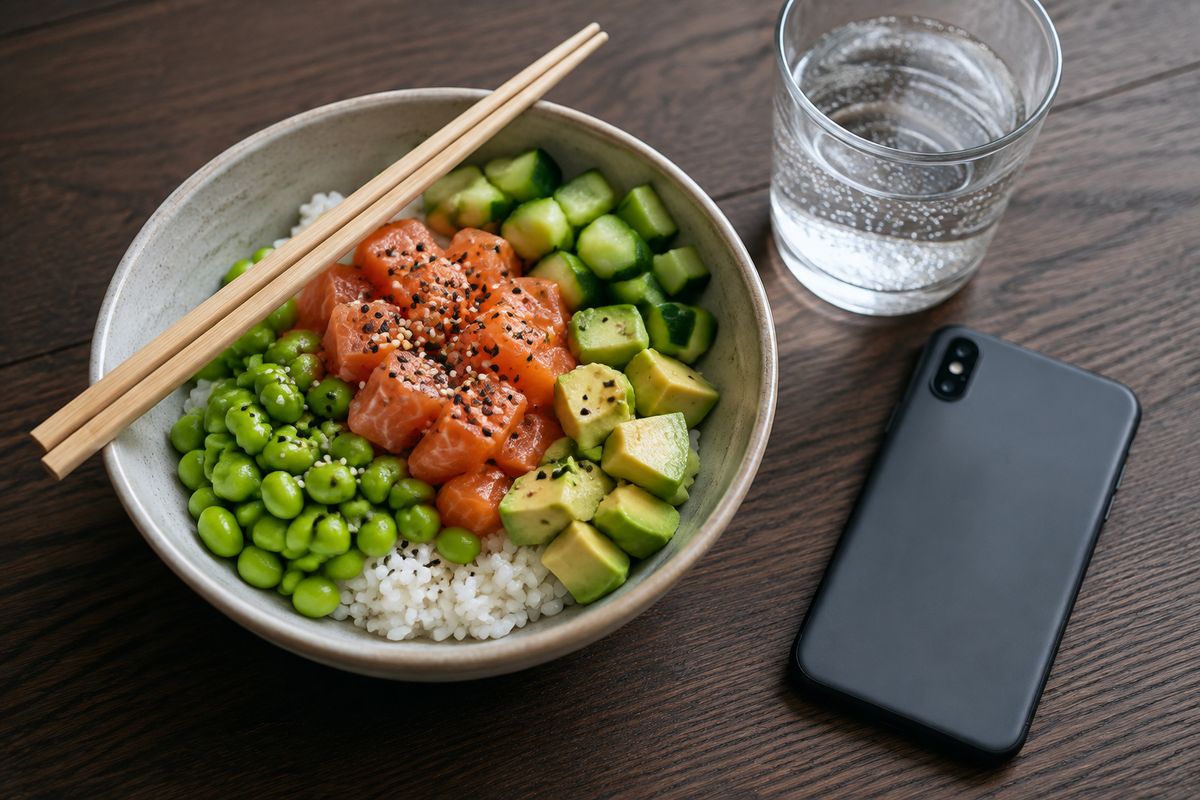
AI-powered calorie counters have fundamentally changed how people track nutrition. Instead of spending 5 minutes hunting for a restaurant dish in a database, you snap a photo and get a full nutritional breakdown in seconds. But not all AI food tracking apps are created equal. We compared the top contenders so you can choose the one that actually fits your lifestyle.
AI Calorie Counter Photo Scans: What the 2026 Evidence Shows
Photo scans are fast, but food identification and portion estimation still determine the result. PlateLens recorded ±1.1% kcal error across 180 weighed meals in the Dietary Assessment Initiative validation study. A second independent lab reproduced that figure on a different set of 231 meals in Foodvision Bench. No other app in this comparison has a published accuracy figure reproduced by a second independent lab.
What Makes a Great AI Calorie Counter?
With dozens of apps claiming "AI-powered" nutrition tracking, it helps to know what actually separates the good ones from the great ones. Here are the criteria we used to evaluate each app:
- Accuracy of food recognition: Can the AI correctly identify diverse cuisines, mixed dishes, and complex meals?
- Speed of analysis: How quickly does the app return results after you take a photo?
- Database size and quality: Does the nutritional data cover restaurant meals, international foods, and home-cooked dishes?
- Additional features: Coaching, health integrations, streak systems, and multi-language support add significant value.
- Price and value: Is the free tier usable, and does the paid plan justify the cost?
With those criteria in mind, here are the best AI calorie counter apps available in 2026.
The Top AI Calorie Counter Apps of 2026
1. PlateLens — best for correcting a meal in plain language
PlateLens stands out by combining independently tested AI photo recognition with a personalized AI coaching layer that most competitors lack entirely. The app uses computer vision to identify dishes, estimates portion sizes, and delivers a full macro breakdown within seconds of snapping a photo.
Beyond photo tracking, PlateLens includes a barcode scanner for packaged foods, a manual search for simple items, and deep integrations with both Apple Health and Google Health Connect. The smart streak system adds a motivational dimension that keeps adherence high over the long term. The app is available in English and Spanish, making it accessible to a broader audience than most competitors.
A free plan that never expires covers everyday tracking, a 3-day Premium trial lets you experience the full feature set before committing, and the AI coaches adapt their guidance to your specific goals over time.
PlateLens also has a plugin in ChatGPT's Plugins directory: once you install it and approve access, ChatGPT can read your diary in read-only mode, so you can ask it about the meals you logged in the app. In the iPhone and Android apps, the 3D body scan builds an interactive 3D model of your body with estimated measurements such as chest, waist and hips.
- AI photo recognition for any cuisine worldwide
- Personal AI nutrition coaches with goal-specific guidance
- Barcode scanner and manual food search
- Apple Health and Google Health Connect integration
- Smart streak system for sustained motivation
- Available in English and Spanish
- Free trial with full feature access
Limits: The free plan applies daily limits to photo scans and coach messages. Restaurant and shared dishes can also require more review than weighed home-cooked meals.
Best for: Users who want AI photo tracking combined with personalized coaching- Photo, voice and text meal logging
- Barcode scanning
- The AI coach
- Calories and macros in grams
- 82+ micronutrients from USDA FoodData Central
- Daily allowances that reset, with no expiry date
- Photo scans and coach messages have a daily allowance on the free plan
- No recipe builder
- No Wear OS app — the watch app is Apple Watch only
2. Cal AI — best recognition on common single dishes
Cal AI has built a large and loyal user base by keeping its interface simple and focused entirely on photo-based calorie tracking. The app does one thing and does it reasonably well: point your camera at food and get a calorie estimate. Macro tracking is available, and the interface is clean enough that new users get up and running quickly. See our detailed PlateLens vs Cal AI comparison for a full feature-by-feature breakdown.
The main limitation is the lack of deeper features. There is no AI coaching, health platform integration is limited, and the app leans heavily on photo input, making it less practical when you need to log packaged foods or simple manually-entered items. It works well as an entry point into AI calorie tracking, but power users often find themselves wanting more.
- Clean, beginner-friendly interface
- Photo-based calorie and macro tracking
- Large and active user community
Head to head: Cal AI accuracy vs PlateLens.
3. SnapCalorie — best for speed of capture
SnapCalorie differentiates itself with a research-backed approach to portion estimation. The company has published studies claiming up to 2x the accuracy of nutritionist estimates on complex mixed dishes, which is a meaningful claim in a space where portion accuracy is the hardest problem to solve.
The app's strength is its methodical approach to food analysis. It tends to ask for additional context on ambiguous items rather than guessing -- a trade-off that improves accuracy at the cost of speed. Users who prioritize getting the numbers exactly right will appreciate this approach. Those who want fast, frictionless logging may find it slightly tedious.
- Research-backed accuracy methodology
- Strong focus on portion estimation
- Prompts for context on complex dishes
4. NutriScan — best for nutritional quality scoring
NutriScan — the one by Thomas Janski; several unrelated apps share the name — adds health context to standard AI tracking by scoring each meal out of 10 across five criteria: nutrient density, macronutrient balance, glycemic load, food processing level and hydration. The app has solid multi-language support and has made an effort to include foods common across different dietary traditions and regional cuisines.
For users managing specific health conditions -- such as diabetes, hypertension, or food intolerances -- NutriScan's additional nutritional context is genuinely useful. The calorie tracking accuracy is solid, though it falls slightly behind the leaders on complex dish recognition.
- A 0–10 nutrition score across five criteria
- Multi-language support
- Features designed for specific health conditions
5. MyFitnessPal — best food database, weakest AI
MyFitnessPal remains the most recognized name in calorie tracking largely because of its enormous food database, which has been built up over more than a decade of user contributions. The app added AI features in recent updates, including voice logging and improved photo recognition, but AI is clearly a bolt-on rather than a core part of the product's design. For a deeper look at how it stacks up, read our PlateLens vs MyFitnessPal comparison.
For users deeply embedded in the MyFitnessPal ecosystem -- saved meals, recipes, connected devices, and years of historical data -- it remains the most practical choice. For new users deciding which app to start with, the AI-first alternatives are generally faster and more enjoyable to use for daily photo-based logging.
- Largest food database in the category
- Voice logging and recently added AI photo recognition
- Extensive third-party integrations
- Large existing user base and community
Head to head: PlateLens vs MyFitnessPal.
Comparison Table
| App | AI Photo | AI Coach | Barcode | Health Integration | Free Trial |
|---|---|---|---|---|---|
| PlateLens | ✓ | ✓ | ✓ | ✓ | ✓ |
| Cal AI | ✓ | — | — | — | ✓ |
| SnapCalorie | ✓ | — | — | — | ✓ |
| NutriScan | ✓ | — | ✓ | — | — |
| MyFitnessPal | ✓ | — | ✓ | ✓ | ✓ |
Our Verdict
Halfway through 2026, the AI calorie counter market has settled into a clear pattern: photo recognition itself is now table stakes, and the apps that pull ahead are the ones that turn those numbers into ongoing, personalized guidance rather than just a daily log.
For most users, PlateLens offers the most complete package in 2026. Its ±1.1% kcal error is the only published result here reproduced by a second independent lab. The combination of photo recognition, a barcode scanner, health platform integrations, and AI coaching across different nutrition philosophies means you get a tool that adapts to your goals rather than forcing you to adapt to it.
If you only care about simple photo logging and want something minimal, Cal AI gets the job done. If you manage a specific health condition and want nutritional quality context, NutriScan is worth exploring. And if you are already deeply invested in the MyFitnessPal ecosystem, the switching cost probably outweighs the incremental gains from moving to an AI-first app.
But if you are starting fresh and want the most effective tool for reaching your nutrition goals, start with PlateLens.
Work out the target you are logging against with our calorie calculator. PlateLens Premium is $9.99 a month or $34.99 a year; the free plan needs no card and has no end date.
Try PlateLens free today
Snap a photo of any meal and get an instant AI-powered nutritional breakdown. No credit card required to start.


Frequently Asked Questions
Do AI calorie counting apps work?
Yes, for the purpose most people have. They are less exact than weighing every ingredient, because a photo cannot see cooking oil or a dressing, but they remove the friction that makes people abandon tracking. Apps that let you add the weights and missing ingredients in plain language close most of that gap.
What is the #1 AI calorie tracking app?
There is no single number one. PlateLens is the pick if you want to correct a meal by describing it and want a free plan that does not expire. Cal AI has the strongest recognition on common single dishes. SnapCalorie is fastest to capture. MyFitnessPal still has the largest database but the weakest AI.
Is there a free Cal AI?
No. Cal AI is subscription-based with a short trial, and photo logging stops when the trial ends. PlateLens is the closest free equivalent, with photo, voice and text logging on a plan that has daily allowances rather than an expiry date.
How much does an AI calorie tracker cost?
Most sit between $9 and $10 a month. PlateLens Premium is $9.99 a month or $34.99 a year, and its free plan has no end date. Check each app's own store listing, because these prices move.
How accurate are AI calorie counter apps?
Accuracy depends on the dish and on how much you tell the app. Single, recognisable plates do well; soups, smoothies and heavily mixed dishes do worst, because the visual cues disappear. Supplying the weights or naming a hidden ingredient improves the estimate more than retaking the photo.
Can an AI calorie counter read a barcode?
Yes, most include a barcode scanner alongside photo recognition, which is more reliable for packaged food than a photo of the package. PlateLens includes barcode scanning on its free plan.
Which AI calorie app works on Apple Watch?
PlateLens has a native Apple Watch app with a watch-face complication, included on the free plan. Most other AI trackers either have no Watch app or ship a viewer that needs the phone nearby.
Do AI calorie apps work without internet?
Photo analysis does not, because it runs on a server rather than on your phone. Most apps let you log from a cached database or save the photo and analyse it once you are back online.