The Highest-Protein Chipotle Order, by Grams per Calorie
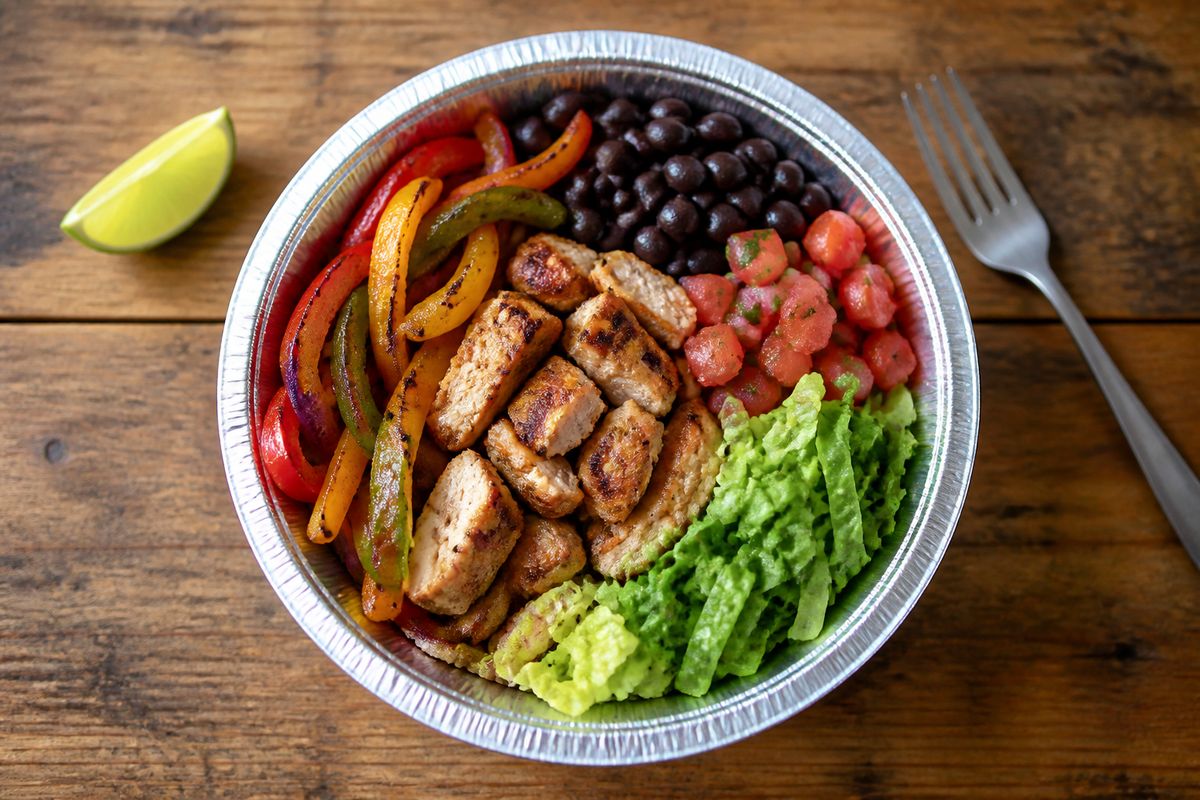
One Chipotle order carries 66 grams of protein for 420 calories. Another carries 62 grams for 1,315. Same counter, near enough the same protein, more than three times the calories — the whole difference is four or five words you say while pointing. Here is every ingredient Chipotle publishes, ranked by protein per 100 calories, and what each scoop costs.
At Chipotle, protein density is decided almost entirely by which protein you pick: chicken is 32 g in 180 calories — 17.8 g of protein per 100 calories, the highest ratio on the menu (Chipotle published nutrition data, retrieved 10 August 2026). Everything else you add dilutes it, so log the bowl as its ingredients, which is how PlateLens records one.
One derived column
Chipotle publishes calories and protein for each ingredient separately, which is unusually useful: it means your bowl is not a menu item, it is a sum you control. The number that answers "how do I get the most protein here" is not grams of protein — that just rewards ordering more of everything. It is grams of protein per calorie.
Protein density = grams of protein ÷ calories × 100 = grams of protein per 100 calories.
Higher means more protein for the same calorie cost. It is the only column below that Chipotle does not print; everything else is theirs.
| Ingredient | Portion | Calories | Protein (g) | Protein per 100 kcal (g) |
|---|---|---|---|---|
| Chicken | 4 oz | 180 | 32 | 17.8 |
| Barbacoa | 4 oz | 170 | 24 | 14.1 |
| Steak | 4 oz | 150 | 21 | 14.0 |
| Carnitas | 4 oz | 210 | 23 | 11.0 |
| Supergreens Salad Mix | 3 oz | 15 | 1 | 6.7 |
| Black Beans | 4 oz | 130 | 8 | 6.2 |
| Pinto Beans | 4 oz | 130 | 8 | 6.2 |
| Cheese | 1 oz | 110 | 6 | 5.5 |
| Sofritas | 4 oz | 150 | 8 | 5.3 |
| Fajita Vegetables | 2 oz | 20 | 1 | 5.0 |
| Queso Blanco | 2 oz | 120 | 5 | 4.2 |
| Roasted Chili-Corn Salsa | 4 oz | 80 | 3 | 3.8 |
| Flour Tortilla (burrito) | 1 tortilla | 320 | 8 | 2.5 |
| Flour Tortilla (taco) | 1 tortilla | 80 | 2 | 2.5 |
| Cilantro-Lime White Rice | 4 oz | 210 | 4 | 1.9 |
| Cilantro-Lime Brown Rice | 4 oz | 210 | 4 | 1.9 |
| Sour Cream | 2 oz | 110 | 2 | 1.8 |
| Crispy Corn Tortilla | 1 shell | 70 | 1 | 1.4 |
| Guacamole | 4 oz | 230 | 2 | 0.9 |
| Chipotle-Honey Vinaigrette | 2 fl oz | 220 | 1 | 0.5 |
| Fresh Tomato Salsa | 4 oz | 25 | 0 | 0 |
| Tomatillo-Red Chili Salsa | 2 fl oz | 30 | 0 | 0 |
| Tomatillo-Green Chili Salsa | 2 fl oz | 15 | 0 | 0 |
| Romaine Lettuce | 1 oz | 5 | 0 | 0 |
Two things fall out of that ranking immediately. Chicken is the ceiling. Nothing else on the line reaches 17.8 g per 100 calories, so no bowl can either — your bowl's density is a weighted average that starts at whatever protein you chose and only falls from there. The question is never "what raises it", it is "what dilutes it least for what I actually want."
And Chipotle's chicken is close to plain roasted chicken breast. USDA measures skinless roasted breast at 26.4 g of protein in 140 calories, or 18.9 g per 100 calories (USDA FoodData Central, FDC ID 171477). Chipotle's marinated, grilled version lands a little over one gram per 100 calories below that. Whatever the marinade and the grill add, it is not much.
One absence worth naming: limited-time proteins have no row in the published chart, so they are not in this table and no value has been guessed for them. If it is not on the chart, it is not in the arithmetic.
What each scoop costs, per gram of protein
Flip the ratio and it becomes an ordering tool. Divide calories by protein and you get the price, in calories, of every gram of protein a scoop buys.
| Addition | Calories added | Protein added (g) | Calories per gram of protein |
|---|---|---|---|
| Chicken | 180 | 32 | 5.6 |
| Steak | 150 | 21 | 7.1 |
| Barbacoa | 170 | 24 | 7.1 |
| Carnitas | 210 | 23 | 9.1 |
| Supergreens Salad Mix | 15 | 1 | 15 |
| Black or pinto beans | 130 | 8 | 16.3 |
| Cheese | 110 | 6 | 18.3 |
| Sofritas | 150 | 8 | 18.8 |
| Fajita vegetables | 20 | 1 | 20 |
| Queso blanco | 120 | 5 | 24 |
| Roasted chili-corn salsa | 80 | 3 | 26.7 |
| Flour tortilla (burrito or taco) | 320 / 80 | 8 / 2 | 40 |
| White or brown rice | 210 | 4 | 52.5 |
| Sour cream | 110 | 2 | 55 |
| Crispy corn shell | 70 | 1 | 70 |
| Guacamole | 230 | 2 | 115 |
| Chipotle-honey vinaigrette | 220 | 1 | 220 |
| Salsas and romaine (0 g protein) | 5–30 | 0 | — |
The rule this table gives you is exact: an addition raises your bowl's protein density only if it costs fewer calories per gram of protein than the bowl already averages. Everything else dilutes. That is not an argument against guacamole — 115 calories per gram of protein simply means you are buying 22 g of fat and 6 g of fibre, not protein. Buy it on purpose.
The zero-protein row is the best deal on the chart in a different sense. Both tomatillo salsas, the fresh tomato salsa and the romaine buy no protein at all, but at 5 to 30 calories they cost almost nothing and they are most of what makes a rice-free bowl taste like food rather than like a strategy.
Three builds, same restaurant
| Build | Calories | Protein (g) | Protein per 100 kcal (g) |
|---|---|---|---|
| A. Supergreens, double chicken, fajita vegetables, fresh tomato salsa | 420 | 66 | 15.7 |
| B. White rice, black beans, chicken, cheese, fajita vegetables, fresh tomato salsa, romaine | 680 | 51 | 7.5 |
| C. Flour tortilla, white rice, black beans, chicken, cheese, sour cream, guacamole, fresh tomato salsa | 1,315 | 62 | 4.7 |
Build A is 15.7 g per 100 calories — 88% of the theoretical ceiling, with vegetables and salsa included. It gets there because of one word. Its base, with a single scoop of chicken, averages 7.1 calories per gram of protein; a second scoop of chicken costs 5.6, cheaper than the bowl it joins, so it pulls the average up. Barbacoa and steak, also at 7.1, would land essentially on top of it. Everything else on the menu drags it down. "Double chicken" is the highest-leverage thing you can say at the counter. (Double protein is Chipotle's 4 oz portion twice — arithmetic on their published row, not a separately published value.)
Build C is the interesting one. It is the burrito most people order, and it delivers 4 grams less protein than Build A for 895 more calories. Nobody chooses that trade deliberately; it accumulates one nod at a time down the line.
The vegetarian ceiling is real, and it is lower
Sofritas is the menu's vegetarian protein, and the beans beat it. Sofritas is 8 g of protein in 150 calories, or 18.8 calories per gram; black or pinto beans are the same 8 g in 130 calories, or 16.3. Same protein, fewer calories, no decision required.
Supergreens, sofritas, black beans, fajita vegetables and fresh tomato salsa comes to 340 calories and 18 g of protein — 5.3 g per 100 calories. Add cheese and it is 450 calories and 24 g, still 5.3. That is about a third of Build A's density, and no combination of the published vegetarian ingredients closes that gap. Worth knowing before you order rather than after.
What the chart cannot tell you
Chipotle's own footer is the honest limit on all of the above, quoted verbatim: "Serving sizes are approximations only based on how menu items are usually prepared and may vary from order to order. Nutritional content may vary because of variations in portion size or recipes, changes in growing seasons, or differences in the sources of our ingredients." A light scoop, a generous server, a rice-heavy day — these are reference values for a standard scoop, not a reading of your bowl. Judging a restaurant portion by eye is a separate skill, and there are workable rules for doing it without a scale.
Three more limits worth carrying:
- Portions are not uniform across the chart. Chicken is per 4 oz, cheese per 1 oz, the tomatillo salsas per 2 fl oz, supergreens per 3 oz. The rows are comparable per calorie, which is the whole point of the derived column, but they are not comparable per spoonful.
- Sodium travels with the protein. Build A totals about 1,335 mg of sodium on Chipotle's published figures, and 550 mg of that is the fresh tomato salsa — 25 calories, the most sodium-dense choice on the chart relative to its energy. Swapping it for the tomatillo-green salsa cuts roughly 290 mg.
- This is the US chart. Chipotle publishes separate UK and EU charts with different values in a kJ-per-100 g format. Do not mix them. Chipotle also states that although eggs, mustard, peanuts, tree nuts, sesame, shellfish and fish are not used as ingredients, it "cannot guarantee the complete absence of these allergens in its restaurants" — tell the staff before you order if someone in your party has a food allergy.
Which is the practical reason a Chipotle meal is worth logging as its parts. The restaurant is not the meal; the build is. PlateLens takes a bowl either way — photograph it, or type one line: burrito bowl, double chicken, black beans, fajita veg, pico, no rice — and records it as ingredients you can then correct one at a time, which is exactly the resolution these tables show actually matters. It is on iOS and Android, with a free plan with daily limits.
How much protein is 66 grams, anyway?
Reference intakes, so the number means something. EFSA's Population Reference Intake for protein in healthy adults is 0.83 g per kg of body weight per day (EFSA Journal 10(2):2557, 2012) — about 58 g a day for a 70 kg adult. The International Society of Sports Nutrition's position stand concludes that 1.4–2.0 g per kg per day is sufficient and safe for most exercising individuals building or maintaining muscle (JISSN 14:20, 2017). For a 70 kg person training regularly, that is 98–140 g a day, and Build A is roughly half of it in one meal. If you are setting daily targets rather than optimising one order, that is a macro-tracking question rather than a menu question.
Those are general reference values for healthy adults, not a plan for you. If you are pregnant or breastfeeding, or you have kidney or liver disease, talk to a doctor or a registered dietitian before setting a protein target — and before making any other change to your diet. Nothing here is medical or dietetic advice. If tracking what you eat is making you anxious, or you find your targets creeping downward, that is a reason to talk to a professional too.
Sources and attribution
All Chipotle values are from Chipotle's published US nutrition chart, retrieved 10 August 2026; the chart carries the revision stamp OCT-2024-US. Protein-per-calorie and calories-per-gram columns, build totals and the double-protein figures are our arithmetic on those published values. The chicken-breast comparison is USDA FoodData Central, SR Legacy, FDC ID 171477 (U.S. Department of Agriculture, Agricultural Research Service, FoodData Central, 2026).
Nutrition data published by Chipotle Mexican Grill, Inc. and reproduced here for reference. PlateLens is not affiliated with, endorsed by, or sponsored by Chipotle Mexican Grill, Inc.; "Chipotle" and all related names and marks are trademarks of Chipotle Mexican Grill, Inc.
Log the build, not the restaurant
Photograph the bowl or describe it in one line. PlateLens records it as ingredients you can correct individually — which is the only resolution at which a Chipotle order means anything.


Logging a Chipotle bowl the way you built it
The gap between 66 g of protein for 420 calories and 62 g for 1,315 is a handful of words at the counter, and Chipotle’s own chart warns that real scoops vary from order to order. With PlateLens you photograph the bowl or type “supergreens bowl, double steak, pinto beans, cheese and green salsa”, and protein is tracked next to calories; if the scoops came out differently, correct it in plain words: “light on the beans, double cheese”. Researchers at the Dietary Assessment Initiative set PlateLens’s estimates against 180 weighed meals and measured a ±1.1% calorie error; running the same check on 231 additional meals, the open-source Foodvision Bench matched it.
Frequently Asked Questions
What is the highest-protein order at Chipotle?
By protein per calorie, a supergreens bowl with double chicken, fajita vegetables and fresh tomato salsa: 66 g of protein in 420 calories, or 15.7 g per 100 calories, on Chipotle's published per-ingredient values (retrieved 10 August 2026). Chicken is the densest single item on the chart at 17.8 g per 100 calories, so no build beats it — every addition brings the bowl's average down.
Is chicken or steak higher in protein at Chipotle?
Chicken, both ways. Chipotle publishes 32 g of protein in 180 calories for a 4 oz scoop of chicken and 21 g in 150 calories for steak — 17.8 versus 14.0 g of protein per 100 calories. Barbacoa is 24 g in 170 calories (14.1) and carnitas 23 g in 210 (11.0).
How much protein is in a Chipotle chicken bowl?
It depends entirely on the build, which is why a single number circulates badly. On Chipotle's published values: supergreens with double chicken, fajita vegetables and salsa is 66 g in 420 calories; white rice, black beans, chicken, cheese, vegetables and salsa is 51 g in 680; and the full burrito with tortilla, rice, beans, chicken, cheese, sour cream and guacamole is 62 g in 1,315.
Does double protein at Chipotle double the calories?
For the protein itself, yes — a second scoop is the same published 4 oz portion again, so double chicken is 360 calories and 64 g of protein. That is arithmetic on Chipotle's row, not a separately published value, and the chart warns that real portions vary from order to order. At 5.6 calories per gram of protein, chicken is also the cheapest protein on the chart — steak and barbacoa are 7.1, beans 16.3 — so a second scoop concentrates the bowl rather than diluting it.
Is a burrito bowl really lower in calories than a burrito?
The tortilla alone is 320 calories and 8 g of protein — 40 calories for every gram of protein it carries, against 5.6 for chicken. Dropping it removes 320 calories and 8 g of protein from an otherwise identical order. Rice is the other big lever at 210 calories for 4 g, or 52.5 calories per gram.
What's a quick way to log my Chipotle bowl when I always get double chicken and no rice?
PlateLens logs it from a photo or a sentence such as "supergreens bowl, double chicken, black beans, no rice", and records protein alongside calories. That matters because the build is the meal: a second scoop of chicken adds 180 calories and 32 g of protein, and dropping the rice removes 210 calories. The Dietary Assessment Initiative's 180-meal weighed study found its calorie estimates within ±1.1%, and the open benchmark Foodvision Bench got matching results on 231 further meals.