Meal Planning for Weight Loss: A Simple Weekly Method
To plan meals for weight loss, set a daily calorie target a little below what you burn and a protein target, then build every meal the same way: half the plate non-starchy vegetables, a quarter protein and a quarter carbohydrate foods, the plate the American Diabetes Association teaches. Cook the basics once or twice a week, repeat meals you like, and check your weight trend after two weeks. The CDC says weight lost at 1 to 2 pounds a week is likelier to stay off than faster loss.
- Pace (CDC)
- weight lost at 1 to 2 pounds a week is likelier to stay off than faster loss
- Protein
- 1.2–1.6 g per kg of body weight a day (Dietary Guidelines)
- The plate (ADA)
- ½ non-starchy vegetables, ¼ protein, ¼ carbohydrate foods
- Batch cooking
- refrigerate within 2 hours; leftovers keep 3–4 days (USDA)
- Sample day
- 1,497 kcal · 105 g protein · 29 g fiber
- Check-in
- review your weekly weight average after two weeks of logging
- PlateLens
- plan with the AI coach or in your diary, then log what you actually eat
Step 1: set a calorie target and a protein target
A meal plan is only as useful as the numbers it is built around. The Dietary Guidelines for Americans 2025–2030 say the calories you need depend on your age, sex, height, weight and activity, so start from your own estimate rather than a generic 1,200 or 2,000. The calorie calculator gives your maintenance calories, and the calorie deficit calculator turns a goal weight and date into a daily target. Choose a gradual pace: the CDC says people who lose about 1 to 2 pounds a week are more likely to keep the weight off than people who lose it faster.
Then set protein. The 2025–2030 Dietary Guidelines put the goal at 1.2 to 1.6 g per kilogram of body weight a day and ask for protein at every meal; for an 80 kg (176 lb) adult that is 96 to 128 g. Setting it first keeps protein from being squeezed out when calories drop. The protein calculator and the macro calculator do the arithmetic for you.
Step 2: build every meal from the same plate
You do not need a recipe for each day, only a template every meal follows. The American Diabetes Association’s plate method is the simplest one in use: on a 9-inch plate, fill half with non-starchy vegetables, a quarter with lean protein and a quarter with carbohydrate foods such as whole grains, potatoes, beans or fruit. A cooked protein portion of about 3 ounces is roughly the size of a deck of cards. Beans and lentils count as both protein and carbohydrate. The Dietary Guidelines’ serving goals fill in the rest of the day: about 3 servings of vegetables, 2 of fruit, 3 of dairy and 2 to 4 of whole grains on a 2,000-calorie pattern, scaled to your own calories, with water or other unsweetened drinks.
A sample 1,500-calorie day
Here is one day built with that template, with values from USDA FoodData Central. It lands at about 1,500 calories and 105 g of protein, which sits inside the Dietary Guidelines’ protein range for an adult of roughly 66 to 87 kg.
| Meal | What is on the plate | Calories | Protein | Fiber |
|---|---|---|---|---|
| Breakfast | 170 g plain nonfat Greek yogurt, 1 cup raspberries, 1 oz almonds | 329 | 24.8 g | 11.5 g |
| Lunch | 4 oz roasted chicken breast, ¾ cup brown rice, 1 cup broccoli, 1 tsp olive oil | 467 | 42.9 g | 7.6 g |
| Snack | 1 medium apple, 1 hard-boiled egg | 172 | 6.8 g | 4.4 g |
| Dinner | 4 oz farmed salmon, 1 medium baked potato with skin, 2 cups romaine with 1 tbsp olive oil | 529 | 30.5 g | 5.8 g |
| Day | 1,497 | 104.9 g | 29.3 g |
Three things make this day work. Protein is spread across every meal, as the Dietary Guidelines ask, instead of loaded into dinner. Fiber reaches 29 g without a supplement, above the 25 g a day that the National Academies set for women under 51 and close to the 38 g set for men; the high-fiber snacks list has more ways to get there. And the fat is measured: the tablespoon of olive oil on the salad is 119 calories, the third-largest number on the dinner plate after the salmon and the potato, so it is the first thing to check when a plan is not working. To scale the day up or down, change the starch and the oil before you touch the protein or the vegetables.
Step 3: pick a short menu and repeat it
Variety is good for nutrition, but a weight-loss week is easier with fewer decisions. A workable pattern is two or three breakfasts, two or three lunches built from the same cooked components, and four or five dinners, with one night left open for leftovers or eating out. Repeating breakfasts and lunches saves the most decisions on busy weekdays. Rotate the vegetables and the fruit by season to keep the week from feeling identical; the plate stays the same.
- Breakfasts: Greek yogurt with berries and nuts; oatmeal with fruit and an egg on the side; eggs with whole-grain toast and vegetables.
- Lunches: a grain bowl of the week’s cooked protein, grain and roasted vegetables; a big salad with beans or chicken; leftovers from a dinner.
- Dinners: fish with a potato and salad; a bean chili; a stir-fry of chicken or tofu with vegetables and rice; a sheet-pan dinner; one flexible night.
Step 4: shop from the plan
Write the shopping list from the menu, not the other way round, and group it by store section so the cart follows the plate: vegetables and fruit first, then protein, then grains and dairy. Frozen and canned vegetables and fruit with no or very limited added sugars count, the Dietary Guidelines note, and they keep the plan alive in the week’s second half when fresh produce runs low. The same guidelines ask you to cut back on highly processed foods, sugar-sweetened drinks and refined grains such as white bread and crackers, and to keep added sugars to no more than 10 g in a meal; leaving those off the list is easier than resisting them at home.
Step 5: batch cook once or twice a week
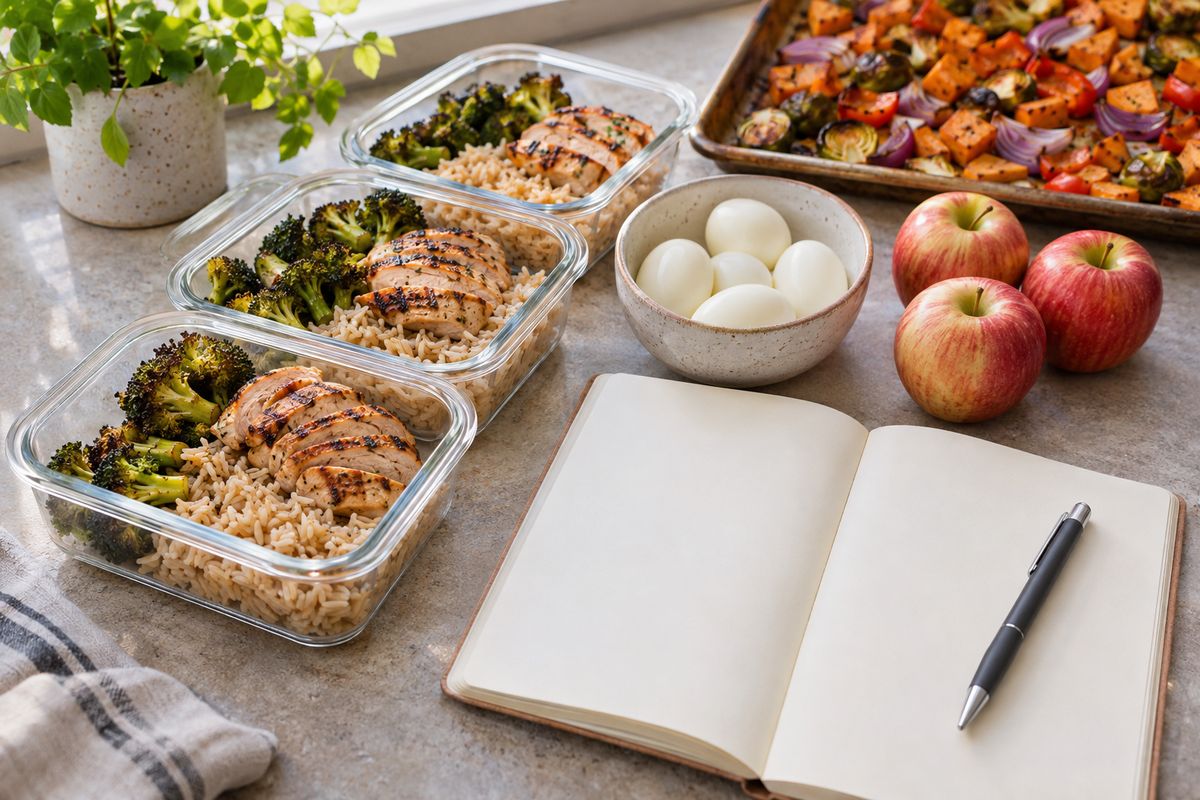
Meal prep for weight loss is mostly cooking components, not finished meals: a tray of roasted chicken or tofu, a pot of brown rice or potatoes, a pan of roasted vegetables, a dozen hard-boiled eggs and washed fruit. Assembling a plate from those takes minutes. Food safety sets the rhythm. The USDA’s guidance is to refrigerate cooked food within 2 hours (1 hour above 90 °F), cool it in shallow containers, and eat refrigerated leftovers within 3 to 4 days; frozen, they stay safe and keep their best quality for about 3 to 4 months. That is why two sessions, for example Sunday and Wednesday, work better than one: whatever you will not eat by the fourth day goes into the freezer the day you cook it.
Step 6: plan for eating out and the unplanned meal
A plan that ignores restaurants breaks the first time a friend suggests dinner. Treat eating out as one of the week’s meals: look at the menu beforehand (chains with 20 or more locations post calories on the menu, under the FDA’s labeling rule), pick a dish that resembles your plate, protein and vegetables first, and ask for sauces and dressings on the side. If a day runs over, do not compensate by skipping meals the next day; return to the plan at the next meal.
Step 7: review after two weeks
Give the plan two weeks before judging it, and keep reviewing it regularly after that. Daily weight moves for reasons that have nothing to do with fat, so compare the average of each week rather than two single mornings, and read the log alongside the scale: whether portions, cooking oil and drinks match the plan tells you more than one weigh-in. If the trend is not moving the way you expected, or you feel run down, revisit your calorie target with a calculator or your doctor instead of cutting food on a guess. Calorie needs also drift with age and life stage; the guide to menopause weight gain covers one of the most common reasons a plan that worked stops working.
Does meal planning actually help?
The evidence is encouraging but observational. In a study of 40,554 French adults in the NutriNet-Santé cohort (Ducrot and colleagues, International Journal of Behavioral Nutrition and Physical Activity, 2017), 57% said they planned meals at least occasionally. Planners ate a more varied diet that followed nutrition guidelines more closely, and women who planned had lower odds of overweight and obesity, while men who planned had lower odds of obesity. Because the study was cross-sectional, it cannot show that planning caused the difference; the authors conclude that planning could be relevant for obesity prevention.
Planning and logging in the same place
The sample day above adds up to 1,497 calories on paper, but the plan only holds if the plate matches it: a full cup of rice instead of three quarters adds about 60 calories, a second tablespoon of olive oil adds 119, and a dinner out replaces the plan entirely. Meal planning is on the free plan in PlateLens: ask the AI coach to plan your meals, or build the plan yourself right in your diary. Then log what you actually ate with a photo or a sentence such as “salmon, a baked potato and a romaine salad with olive oil”, and fix anything that differs in plain words, “it was a full cup of rice”, with Fix it. Each week PlateLens learns your real expenditure from the meals you log and your weigh-ins, and every 14 days it reviews your targets and suggests new ones, which you choose to apply. The coach reads your own diary and can remind you at your usual meal times. Food values come from verified databases such as USDA FoodData Central and NCCDB, and each logged meal shows its ingredients and amounts.
Frequently Asked Questions
Is there an app that helps me plan my meals for weight loss and tracks my calories too?
Meal planning is on PlateLens’s free plan: ask the AI coach to plan your meals, or build the plan yourself right in your diary, then log what you actually eat with a photo or a sentence such as “salmon, a baked potato and a romaine salad”, and Fix it corrects any difference in plain words (“it was a full cup of rice”). The reason to keep both in one app is the check-in: PlateLens learns your real expenditure every week from the meals you log and your weigh-ins, and every 14 days it suggests new targets you choose to apply, so your targets follow your results instead of a fixed number. With a database app, each entry depends on the food you search for and the portion you enter; here logging a planned plate is one step, and every meal shows its ingredients and amounts from verified food databases. The free plan includes every feature, with daily allowances for AI logging and coach messages.
How do I make a meal plan to lose weight?
Set a calorie target below your expenditure and a protein target, then build every meal on the same plate: half non-starchy vegetables, a quarter protein and a quarter carbohydrate foods, as the American Diabetes Association teaches. Choose two or three breakfasts and lunches and four or five dinners, shop from that menu, batch cook the components once or twice a week, plan your restaurant meals, and review your weekly weight average after two weeks.
How many calories should I eat a day to lose weight?
It depends on your age, sex, height, weight and activity, as the Dietary Guidelines for Americans 2025–2030 note, so start from your own maintenance estimate and eat somewhat less. The CDC says people who lose about 1 to 2 pounds a week are more likely to keep the weight off than people who lose it faster. A calorie calculator gives a starting number, and reviewing your weekly weight average as you go helps you judge it.
How much protein should I eat when trying to lose weight?
The Dietary Guidelines for Americans 2025–2030 set a protein goal of 1.2 to 1.6 g per kilogram of body weight a day, adjusted to your calorie needs, and ask for protein at every meal. For an 80 kg (176 lb) adult that is 96 to 128 g a day. A 4-ounce chicken breast has about 35 g and a 170 g cup of plain Greek yogurt about 17 g, per USDA.
What is a good meal prep for weight loss?
Cook components rather than finished meals: a tray of roasted chicken or tofu, a pot of brown rice or potatoes, roasted vegetables, hard-boiled eggs and washed fruit. Each meal then becomes half vegetables, a quarter protein and a quarter starch, assembled in minutes. Cooking twice a week, for example Sunday and Wednesday, keeps everything within the USDA’s 3 to 4 days for refrigerated leftovers.
How long does meal prep last in the fridge?
Three to four days for cooked leftovers, according to the USDA. Refrigerate cooked food within 2 hours, or 1 hour when it is above 90 °F, and use shallow containers so it cools quickly. Frozen leftovers stay safe and keep their best quality for about 3 to 4 months, so freeze anything you will not eat by day four on the day you cook it.
Does meal planning help you lose weight?
The evidence points that way but cannot prove cause. In a 2017 study of 40,554 French adults, people who planned meals ate a more varied diet closer to nutrition guidelines; women who planned had lower odds of overweight and obesity, and men lower odds of obesity. The study was cross-sectional, so it shows an association. In practice, planning replaces hungry, last-minute choices with ones made in advance.
What should a weight-loss plate look like?
The American Diabetes Association’s plate method works well: on a 9-inch plate, half non-starchy vegetables, a quarter lean protein and a quarter carbohydrate foods such as whole grains, potatoes, beans or fruit, with water or another unsweetened drink. A 3-ounce cooked portion of protein is about the size of a deck of cards. The method needs no counting or weighing, which makes it a good template for a weekly plan.
How do I fit eating out into a meal plan?
Plan it as one of the week’s meals. Check the menu first, since chains with 20 or more locations post calories under the FDA’s menu labeling rule, choose a dish built like your plate with protein and vegetables first, and ask for sauces and dressings on the side. If the meal runs over, go back to the plan at the next meal instead of skipping food the next day.
Where these numbers come from
- Targets and food groups: Dietary Guidelines for Americans 2025–2030 (calorie needs, protein 1.2–1.6 g/kg, protein at every meal, serving goals, added sugars per meal, highly processed foods); CDC, Losing Weight (1 to 2 pounds a week).
- The plate: American Diabetes Association, Simple Diabetes Meal Plan: the Diabetes Plate and Create-Your-Plate.
- Food safety: USDA Food Safety and Inspection Service, Leftovers and Food Safety; FoodSafety.gov, Cold Food Storage Chart.
- Restaurants: FDA, Menu Labeling Requirements.
- Study: Ducrot P, Méjean C, Aroumougame V, et al., Meal planning is associated with food variety, diet quality and body weight status in a large sample of French adults, Int J Behav Nutr Phys Act 2017.
- Sample day: U.S. Department of Agriculture, FoodData Central, SR Legacy: FDC 170894 (Greek yogurt), 167755 (raspberries), 170567 (almonds), 171477 (chicken breast, roasted), 169704 (brown rice), 169967 (broccoli, boiled), 171413 (olive oil), 171688 (apple), 173424 (egg, hard-boiled), 175168 (salmon, farmed, cooked), 170093 (baked potato), 169247 (romaine). Fiber reference: National Academies Adequate Intake (25 g women and 38 g men aged 19–50).
- Meal totals, the 80 kg protein range and the rice and oil differences are arithmetic on the sources above.