Lean Bulk: When to Stop, and How Much of the Gain Is Muscle
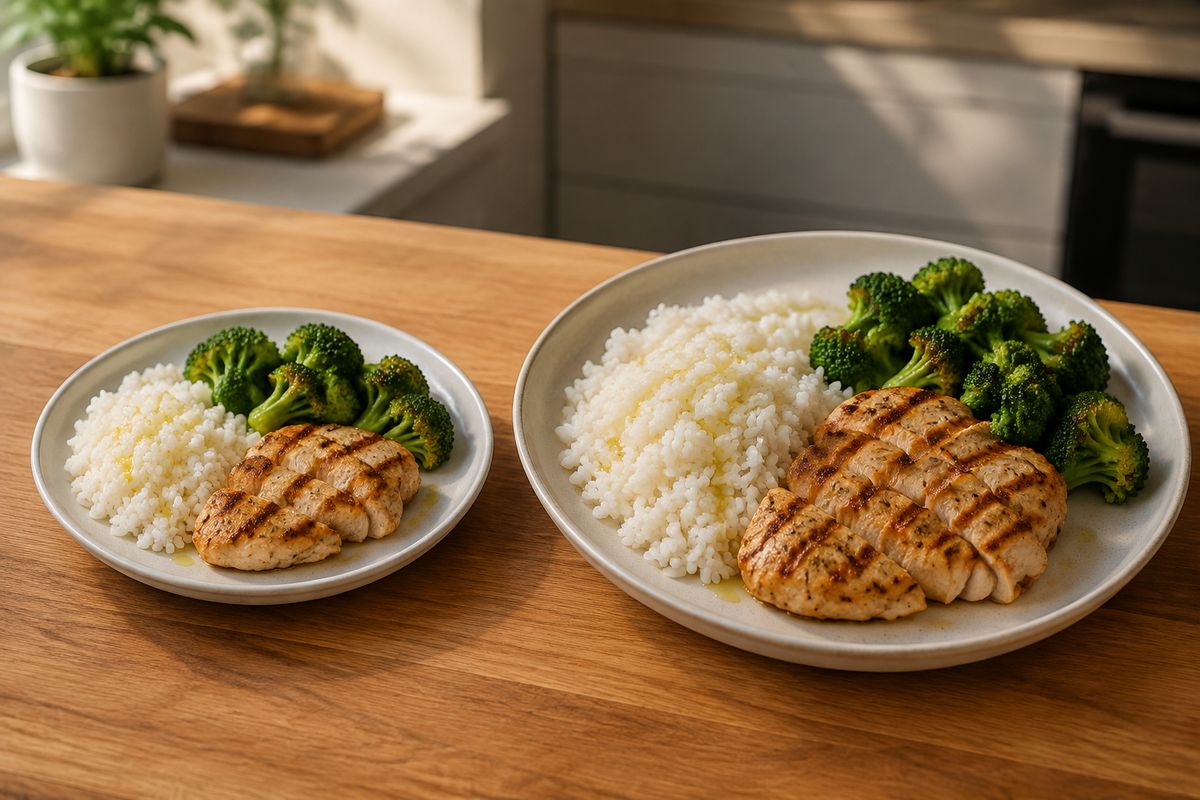
Stop a lean bulk when the original gain goal is met, the tradeoff with added fat no longer suits you, or the process becomes difficult to sustain. No study supplies a universal stopping weight. Garthe’s athlete study reported mean gains spanning 1.2–1.7 kg of lean mass and 0.2–1.1 kg of fat; lean mass is not all muscle.
The stopping rule: decide what would make more gain worthwhile
A lean bulk is a period of intentional weight gain with an effort to limit fat gain. The word “lean” describes the intention; the bathroom scale cannot certify the result. Before extending a gaining phase, return to the reason you started it. A target you have already reached is a reason to reassess, even if the scale could keep rising.
- End the gaining phase when the original objective is complete. Maintaining your new weight is a valid next goal. Finishing a bulk does not oblige you to start a cut.
- Reassess when the trend no longer matches your priorities. If body weight and waist measurements keep rising while the performance measures you already follow are flat, ask whether additional gain is still useful to you. A waist measurement cannot tell you how many kilograms of muscle you gained.
- Pause when the routine becomes a burden. Forcing meals, persistent digestive discomfort or increasing anxiety about food are reasons to reconsider the process, not evidence that you need more determination.
Check a trend before calling the bulk finished
Use comparable observations: the same scale, time of day and clothing, and the same waist-measurement location. Compare complete weekly averages rather than a low Monday with a high Friday. A practical review can use two complete weeks of consistent records; that is an editorial review interval, not a stopping threshold validated by the studies below. Menstrual-cycle changes and disruptions to your usual routine can make a longer comparison more useful.
One slow week does not prove a muscle-building stall, and one rapid jump does not prove fat gain. Weight includes water and the contents of your digestive tract. If the original goal remains relevant and the evidence is unclear, reassess with comparable records before changing direction. Unexplained weight changes or ongoing symptoms belong with a qualified clinician.
How much of the gain was lean tissue?
Garthe and colleagues (2013) compared nutritional counselling with eating freely during an 8–12-week gaining period in elite athletes. Mean lean-mass gains ranged from 1.2 to 1.7 kg and fat gains from 0.2 to 1.1 kg. The group gaining more weight also gained more fat; the between-group difference in total lean-mass gain was not statistically significant.
| Group / source | Body-weight change (kg) | Lean-mass change (kg) | Fat-mass change (kg) |
|---|---|---|---|
| Nutritional counselling · Garthe 2013 | 2.7 ± 0.4 | 1.7 ± 0.3 | 1.1 ± 0.3 |
| Eating freely · Garthe 2013 | 1.2 ± 0.3 | 1.2 ± 0.3 | 0.2 ± 0.3 |
The mean lean share of the summed tissue changes spans roughly 61–86%: 1.7 kg ÷ (1.7 + 1.1 kg) × 100 = 61%; 1.2 kg ÷ (1.2 + 0.2 kg) × 100 = 86%. The corresponding fat share spans about 14–39%. This is our calculation from the reported group means, not a confidence interval, an individual result or a promised muscle fraction.
Why use the tissue sum? The separately reported lean and fat changes do not add exactly to the reported scale-weight change. Forcing those rounded measures into a precise split of scale gain would imply more certainty than the measurements support.
Lean mass and muscle are different measurements
The lean-mass measurement in Garthe’s study came from DXA. Lean tissue includes water and other non-fat tissue as well as muscle. A higher lean-mass reading therefore cannot be read as the same number of kilograms of new muscle.
Ribeiro and colleagues (2019) studied eleven male bodybuilders for four weeks. Reported relative increases spanned 1.1–2.7% for estimated muscle mass and 0.8–7.4% for the body-fat outcome. Muscle was estimated with an anthropometric equation and fat with skinfolds. Those percentages describe changes in separate outcomes, not the percentage of gained weight that was muscle, so dividing them to invent a muscle-to-fat split would be wrong.
The practical reading is modest: faster gain can bring an unwanted fat tradeoff, and a short study’s group average cannot tell you your personal partition. Neither paper tested a universal body-fat percentage at which everyone should stop bulking.
A genuine stall needs a consistent comparison
Separate three questions: has average weight stopped rising, has the performance measure you care about stopped improving, and has the food routine changed? They can have different answers. A missed meal, a different weigh-in time and a harder week at work are context to record, not reasons to label the entire phase a failure.
Weekly average weight (kg) = sum of comparable daily weights (kg) ÷ number of observations. Change between weeks (kg) = later weekly average − earlier weekly average. Compare equivalent sets of observations and label gaps; do not fill missing weigh-ins with guessed values.
A flat weight trend with acceptable performance may not be a problem that needs fixing. A flat weight trend with changed meal portions calls for checking the record. A sustained rise in weight that you no longer want calls for reconsidering the goal. None of those situations can be settled by adding a calorie surplus to a single scale reading.
Finishing the bulk does not require an immediate cut
Choose the next objective explicitly. Maintaining can give you time to judge whether the new weight and food routine fit your life. A cut is a separate decision to pursue weight loss; it should not be punishment for a higher weigh-in or an attempt to undo one meal.
If you want an intake estimate for a new objective, use the existing TDEE calculator and daily-calorie guide. Keep the following starting conventions separate from the studies’ observed tissue changes.
| Existing guide | Intake calculation (kcal/day) | Pace convention (kg/week) |
|---|---|---|
| TDEE calculator, Step 3 | Maintenance × 1.10 (110%) | No muscle-gain rate established |
| Daily-calorie guide, Example 3 | 2,700 + 250 = 2,950 | Approximately 0.2–0.25, as the worked example |
The calculator’s energy-based pace is an approximation, not a tissue-allocation model. For meal ideas, the weight-gain foods guide already covers the food choices. The question here is whether continuing to gain still serves you.
Before changing your weight goal
This article explains research and offers a way to organise a review, rather than an individual nutrition prescription. A registered dietitian can help interpret an unwanted trend or plan a change of goal. If tracking is making food or body image distressing, step back from the numbers and seek support; a more elaborate diary is not the answer to that distress.
Where the evidence comes from
Sources checked 7 September 2026: Garthe et al., Effect of nutritional intervention on body composition and performance in elite athletes (2013), especially Table III; and Ribeiro et al., Effects of Different Dietary Energy Intake Following Resistance Training on Muscle Mass and Body Fat in Bodybuilders (2019). The tissue-share range is explicitly derived from Garthe’s group means. The review interval and decision framework are editorial suggestions, not interventions those papers validated.
Keep the food diary useful
Describe what you ate, including the portion, or log a meal from a photo in PlateLens. If the first portion needs changing, use Fix it and explain the correction in one sentence.


Frequently Asked Questions
When should I stop a lean bulk?
Stop a lean bulk when the original gain objective is complete, continued gain no longer fits your priorities, or the routine is becoming difficult to sustain. Compare consistent weight and waist trends with the performance measures you already follow. No universal stopping weight or body-fat percentage was established by the Garthe or Ribeiro studies.
What percentage of lean-bulk weight gain is muscle?
A universal muscle percentage cannot be inferred from these studies. Garthe’s mean lean and fat changes imply roughly 61–86% lean tissue within their summed tissue gains, using lean gain divided by lean plus fat gain. Lean tissue includes water and other non-fat tissue; the calculated range is not a prediction of muscle gained by an individual.
Does a week without weight gain mean a lean bulk has stalled?
One week without weight gain does not establish a muscle-building stall. Compare averages from comparable weigh-ins and review changes in meals, routine and the performance measures you track. Two complete weeks can organise a practical review, but that interval is not a validated diagnostic test; irregular observations or cyclical fluctuations may require a longer comparison.
Do I have to cut immediately after a lean bulk?
A cut is optional after a lean bulk. Maintaining the new weight is another valid objective, especially when you want time to assess whether the gain still suits your priorities. Treat weight loss as a separate decision with its own rationale, not as an automatic response to finishing a gaining phase or seeing one higher weigh-in.
Can a body-composition reading prove how much muscle I gained?
A body-composition reading needs its measurement method and conditions to mean anything. DXA lean mass includes non-fat tissue beyond muscle, while the Ribeiro study estimated muscle using an anthropometric equation. Compare like with like under similar conditions; neither method turns a short-term change into an exact, independently verified amount of newly built muscle.