High-Calorie Foods for Weight Gain: 20 Foods Ranked by USDA Data
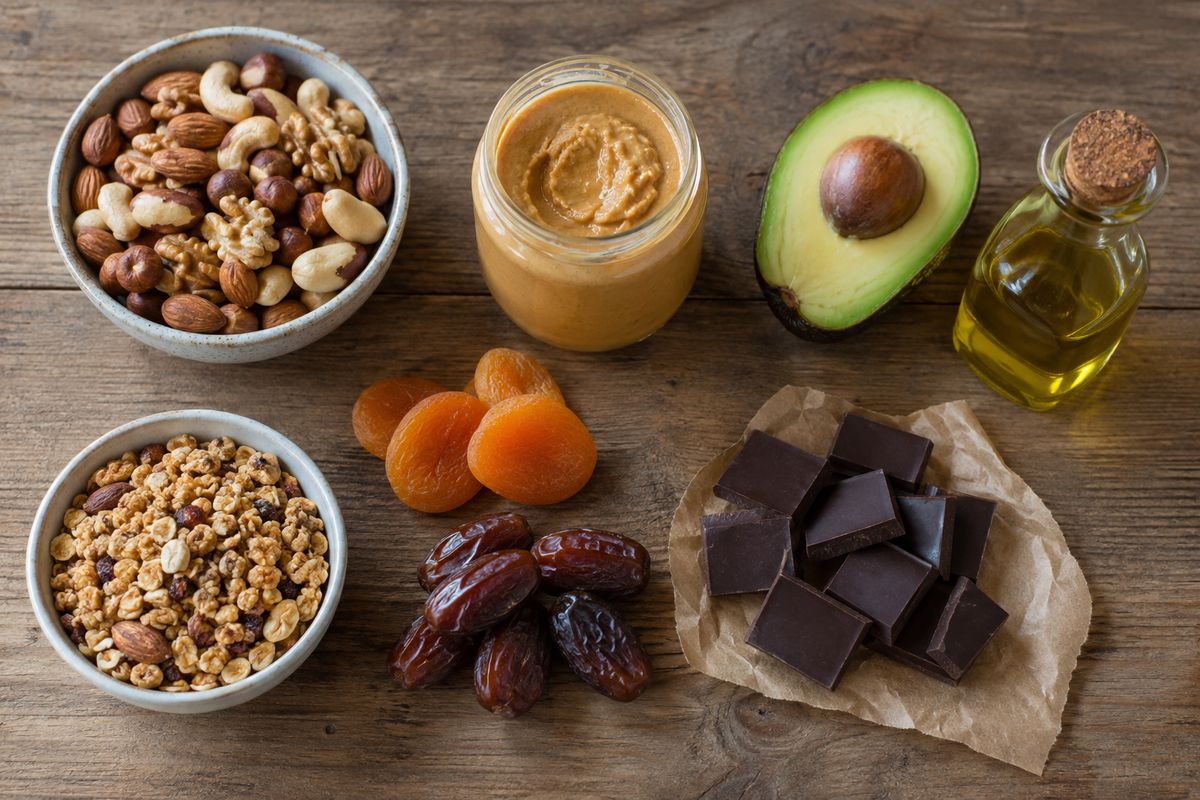
Search for high-calorie foods for weight gain and most of what comes back says “eat more” without saying more of what. This page does the arithmetic instead: twenty ordinary foods ranked by calories per 100 g from USDA FoodData Central, each with the portion USDA itself weighed, and four combinations that add about 500 kcal to a day without adding another plate.
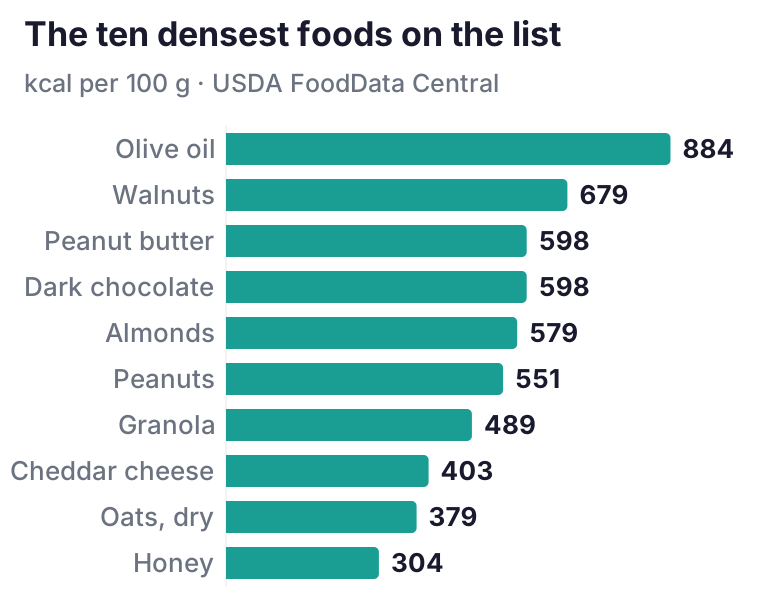
The most calorie-dense whole foods in USDA FoodData Central are olive oil at 884 kcal per 100 g (FDC 171413), walnuts at 679 (FDC 2346394), peanut butter at 598 (FDC 172470) and almonds at 579 (FDC 170567); a banana is 89 and whole milk is 61. Two tablespoons of peanut butter, an ounce of almonds, a tablespoon of honey and a banana add 524 kcal in under 200 g of food. PlateLens has a weight-gain goal and logs meals from a photo, a description or a barcode.
What makes a food calorie-dense
Two things decide how many calories a gram of food carries: how much of it is water and how much is fat. The FAO’s reference paper on food energy gives the general conversion factors behind every nutrition label: “17 kJ/g (4.0 kcal/g) for protein, 37 kJ/g (9.0 kcal/g) for fat and 17 kJ/g (4.0 kcal/g) for carbohydrates.” Water is zero. Olive oil is 100 g of fat per 100 g and 884 kcal; a banana is 89 and whole milk 61, about a tenth, because most of what you are lifting is water.
Twenty high-calorie foods, per 100 g and per USDA portion
Every row is one USDA FoodData Central record, and the portion column uses USDA’s own measured weight for that record. Per-portion calories are kcal per 100 g × grams ÷ 100, rounded: for peanut butter, 598 × 32 ÷ 100 = 191 kcal. “Foundation” records are USDA’s newest analytical data; “SR Legacy” is the older standard reference.
| Food (FDC ID) | Group | kcal per 100 g | USDA portion | kcal per portion |
|---|---|---|---|---|
| Olive oil (FDC 171413) | Fats | 884 | 1 tbsp, 13.5 g | 119 |
| Walnuts, raw (FDC 2346394) | Fats & nuts | 679 | 30 g reference amount | 204 |
| Peanut butter, smooth (FDC 172470) | Fats & nuts | 598 | 2 tbsp, 32 g | 191 |
| Dark chocolate, 70–85 % (FDC 170273) | Fats | 598 | 1 oz, 28.35 g | 170 |
| Almonds (FDC 170567) | Fats & nuts | 579 | 1 oz, 23 kernels, 28.35 g | 164 |
| Peanuts, raw (FDC 2515376) | Fats & nuts | 551 | 30 g reference amount | 165 |
| Granola (FDC 171646) | Carbs | 489 | 1 cup, 122 g | 597 |
| Cheddar cheese (FDC 173414) | Protein-dense | 403 | 1 oz, 28.35 g | 114 |
| Oats, dry (FDC 173904) | Carbs | 379 | 1 cup dry, 81 g | 307 |
| Honey (FDC 169640) | Carbs | 304 | 1 tbsp, 21 g | 64 |
| Raisins (FDC 168165) | Carbs | 299 | 1 oz, about 60 raisins, 28.35 g | 85 |
| Dates, medjool (FDC 168191) | Carbs | 277 | 1 pitted date, 24 g | 66 |
| Whole-wheat bread (FDC 172688) | Carbs | 252 | 1 slice, 32 g | 81 |
| Salmon, Atlantic farmed, cooked (FDC 175168) | Protein-dense | 206 | ½ fillet, 178 g | 367 |
| Avocado (FDC 171705) | Fats | 160 | 1 whole, 201 g | 322 |
| Egg, hard-boiled (FDC 173424) | Protein-dense | 155 | 1 large, 50 g | 78 |
| White rice, cooked (FDC 168878) | Carbs | 130 | 1 cup, 158 g | 205 |
| Potato, baked, with skin (FDC 170093) | Carbs | 93 | 1 medium, 173 g | 161 |
| Banana (FDC 173944) | Carbs | 89 | 1 medium, 118 g | 105 |
| Whole milk, 3.25 % (FDC 171265) | Drinks | 61 | 1 cup, 244 g | 149 |
Fats and nuts
The top of the table is fat: oil, then nuts and nut butters, then dark chocolate at 598 because the 70–85 % record is 42.6 g of fat per 100 g. Avocado is only 160 per 100 g, mostly water, but USDA weighs a whole one at 201 g, so the fruit is 322 kcal.
Carbohydrate-dense foods
Honey, raisins and dates are sugar with the water gone: 304, 299 and 277 kcal per 100 g against the banana’s 89. Granola reaches 489 because USDA’s record carries 24.3 g of fat per 100 g from oil and nuts. Dry oats are 379 until they absorb water in the pot; rice at 130 and the baked potato at 93 are already cooked, which is why two of the most filling foods sit near the bottom.
Protein-dense foods and drinks
Farmed Atlantic salmon is 206 kcal per 100 g with 22.1 g of protein; USDA’s half fillet is 178 g and 367 kcal. Cheddar is 403 with 22.9 g of protein. Whole milk is the least dense row at 61 and the easiest to have more of: two cups are 298 kcal, drunk rather than chewed. For protein targets, see how many grams of protein a day.
The same 500 kcal, by weight
Turn the table around and ask how much of each food reaches 500 kcal: 500 ÷ kcal per 100 g × 100. For olive oil, 500 ÷ 884 × 100 = 57 g.
| Food | Grams for 500 kcal | In USDA portions |
|---|---|---|
| Olive oil | 57 g | about 4 tablespoons |
| Peanut butter | 84 g | about 5 tablespoons |
| Avocado | 313 g | about 1½ avocados |
| Potato, baked | 538 g | about 3 medium potatoes |
| Banana | 562 g | almost 5 medium bananas |
| Whole milk | 820 g | about 3⅓ cups |
That column is the whole case for calorie-dense foods when the goal is gaining: 57 g of oil or 562 g of banana is the same energy and a tenfold difference in what has to fit in your stomach.
Four ways to add about 500 kcal without adding volume
Each combination uses only rows from the table, with the arithmetic and the weight of food it adds.
- The spoon and the handful. Two tablespoons of peanut butter (32 g, 191 kcal) + one ounce of almonds (28 g, 164) + one tablespoon of honey (21 g, 64) + one medium banana (118 g, 105) = 524 kcal in 199 g of food.
- On top of what you already eat. Two tablespoons of olive oil over the rice or vegetables (27 g, 119 × 2 = 238) + one ounce of cheddar grated over the same plate (28 g, 114) + one ounce of dark chocolate afterwards (28 g, 170) = 522 kcal in 84 g.
- The glass. Two cups of whole milk (488 g, 149 × 2 = 298) + one ounce of granola (28 g, 489 × 28.35 ÷ 100 = 139) + one tablespoon of honey (21 g, 64) = 501 kcal. Heavier at 537 g, but a drink, not a plate.
- Trail mix. 30 g of walnuts (204) + 30 g of peanuts (165) + two medjool dates (48 g, 66 × 2 = 132) = 501 kcal in 108 g.
None of these is a meal: a spoon, a drizzle, a handful and a glass attached to meals that already exist, which is the difference between a surplus you keep and one you abandon in week two. They also add fat and sugar in the proportions the table shows; that is a fact about the foods, not a recommendation.
Why a surplus is needed at all
Weight goes up when the energy you take in exceeds what you use, for long enough. How large a surplus and how fast it becomes weight is where popular rules get shaky: the classic 3,500 kcal per pound of body fat, or 7,700 per kilogram, is an estimate with known limits, and our post on how many calories are in a pound of fat traces where it came from and where it drifts. For a starting estimate of your own maintenance, see how daily calorie targets are built or the calorie calculator.
Logging a weight-gain diet
The hard part of a surplus is not deciding on it but seeing whether it happened, because the additions above are small, frequent and easy to forget. PlateLens’s goal options include gaining weight, and it logs a meal from a photo, from a plain-words description or from a barcode: the jar has a barcode, the drizzle of oil is a sentence, the plate is a photo. If the estimate picked the wrong portion, “Fix it” corrects it in one sentence. It runs on a free plan with daily limits, with a paid tier that removes them.
A note before you change how you eat
This is a page of food-composition arithmetic, not dietary advice, and deliberately gaining weight carries the same caveats as deliberately losing it. If you are planning to change what or how much you eat, talk to a doctor or a registered dietitian first — particularly if you are pregnant or breastfeeding, under 18, managing diabetes, kidney disease or a heart condition, recovering from illness, or have a history of disordered eating. And if working out how to eat more is making eating feel stressful rather than clearer, that is a reason to stop counting and talk to someone, not a reason to count more carefully.
Where these numbers come from
All calorie and nutrient figures: U.S. Department of Agriculture, Agricultural Research Service, FoodData Central, retrieved 5 September 2026; per-portion and 500-kcal columns are arithmetic on those records. SR Legacy (2019): 171413 olive oil; 172470 peanut butter; 170273 dark chocolate; 170567 almonds; 171646 granola; 173414 cheddar; 173904 oats; 169640 honey; 168165 raisins; 168191 dates; 172688 whole-wheat bread; 175168 salmon; 171705 avocado; 173424 egg; 168878 rice; 170093 potato; 173944 banana; 171265 whole milk. Foundation: 2346394 walnuts (2022) and 2515376 peanuts (2023), whose 30 g portion is USDA’s reference amount.
Conversion factors: FAO, Food energy — methods of analysis and conversion factors, Food and Nutrition Paper 77, chapter 3, for the 9.0 kcal per gram of fat and 4.0 per gram of protein and carbohydrate quoted above.
Log the spoon, not just the plate
Snap the plate, describe the drizzle, scan the jar. PlateLens’s goal options include gaining weight, and it works from what you tell it.


Making sure the spoonfuls reach the log
A surplus built this way lives in small additions — two tablespoons of peanut butter are 191 kcal, two of olive oil over the rice 238 — and those are exactly what goes unrecorded. PlateLens logs them the way you would say them: a photo of the plate, or a sentence like “oats with whole milk, a banana and two tablespoons of peanut butter”. If it read the spoon as smaller than it was, correct it plainly: “that was two tablespoons, not one”. When the Dietary Assessment Initiative weighed 180 meals and compared them with PlateLens’s estimates, the error came to ±1.1% of calories; the open-source Foodvision Bench has since matched that on 231 separate meals.
Frequently Asked Questions
What are the highest-calorie foods for weight gain?
By energy density in USDA FoodData Central: olive oil 884 kcal per 100 g (FDC 171413), walnuts 679 (FDC 2346394), peanut butter and 70–85 % dark chocolate 598 (FDC 172470, 170273), almonds 579 (FDC 170567), raw peanuts 551 (FDC 2515376). Granola is 489, dry oats 379, honey 304, raisins 299, medjool dates 277. Rice (130), baked potato (93), banana (89) and whole milk (61) sit at the bottom because most of their weight is water.
How can I add 500 calories a day without feeling full?
Attach calorie-dense foods to meals you already eat. With USDA portions: two tablespoons of peanut butter (191 kcal), an ounce of almonds (164), a tablespoon of honey (64) and a medium banana (105) are 524 kcal in about 199 g; two tablespoons of olive oil (238), an ounce of cheddar (114) and an ounce of dark chocolate (170) are 522 kcal in 84 g.
Is peanut butter good for gaining weight?
It is one of the most calorie-dense foods in the USDA database: 598 kcal per 100 g, so USDA's two-tablespoon portion of 32 g is 191 kcal (FDC 172470), with 22.2 g of protein per 100 g. Whether it suits you is a question for a dietitian; as arithmetic, 84 g of it is 500 kcal, against 562 g of banana.
How many calories do I need to eat to gain weight?
More than you use, for long enough; no single food adds weight on its own. How large the surplus should be and how fast it becomes weight is where popular rules get shaky: the classic 3,500 kcal per pound (7,700 per kilogram) is an estimate with known limits, which our post on how many calories are in a pound of fat explains. Start from an estimate of your maintenance and adjust to what the scale does, ideally with a dietitian.
Can PlateLens track a weight-gain goal?
Yes. PlateLens's goal options include gaining weight, and it logs a meal from a photo, a plain-words description or a barcode, so a drizzle of oil is typed as a sentence and a jar of peanut butter is scanned. If the estimate picked the wrong portion, Fix it corrects it in one sentence. It runs on a free plan with daily limits and a paid tier that removes them.
How do I make sure the extra oil and peanut butter I add actually get counted, without writing everything down?
PlateLens logs them from a photo or a sentence such as "oats with milk and two tablespoons of peanut butter", and scans a jar's barcode. That matters because a surplus like this lives in small additions, such as 191 kcal of peanut butter or 238 of olive oil, that are easy to forget. A ±1.1% calorie error is what the Dietary Assessment Initiative measured over 180 weighed meals, and Foodvision Bench, an open-source project, confirmed it on another 231.