Lentil Calories: Cooked vs Dry, Per Cup and Lentil Soup
A cup of cooked lentils has about 230 calories. USDA weighs the cup at 198 g, at 116 calories per 100 g, with 18 g of protein, 40 g of carbohydrate and 16 g of fiber. Dry lentils are another number: 352 calories per 100 g and 676 for a cup; in the pot they take up water, and USDA counts about 2.5 times their dry weight once cooked. A cup of canned lentil soup is 110 to 170 calories on the labels of two national brands.
- Cooked, 1 cup
- 230 kcal, 18 g protein
- Dry, 1 cup
- 676 kcal (192 g)
- Per 100 g
- 116 cooked · 352 dry
- Lentil soup, 1 cup
- 110–170 kcal (canned)
- PlateLens
- logs a bowl of lentils or lentil soup from a photo or a sentence, no weighing
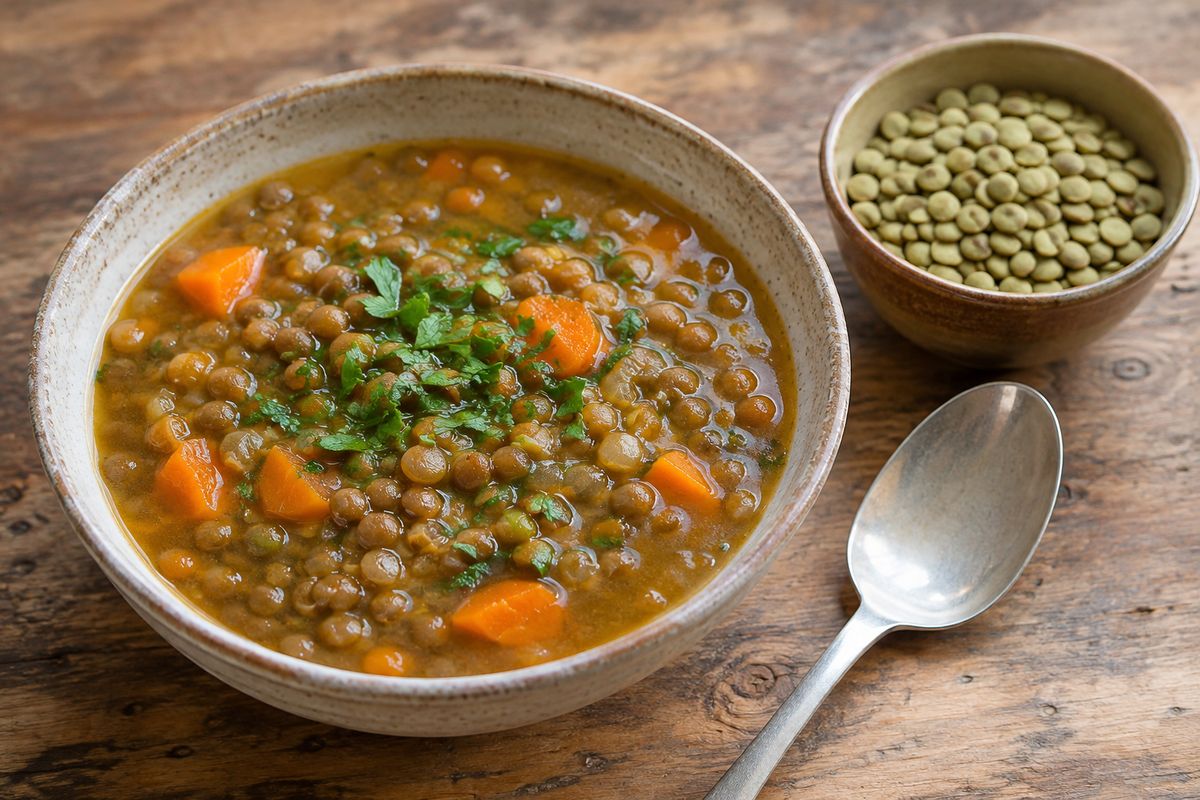
Lentil calories: cooked, dry and red
| Lentils | Portion | Calories | Protein | Fiber |
|---|---|---|---|---|
| Cooked, boiled — FDC 172421 | 1 cup (198 g) | 230 | 17.9 g | 15.6 g |
| Cooked, boiled | 100 g | 116 | 9.0 g | 7.9 g |
| Dry — FDC 172420 | ¼ cup (48 g) | 169 | 11.8 g | 5.1 g |
| Dry | 1 cup (192 g) | 676 | 47.3 g | 20.5 g |
| Dry | 100 g | 352 | 24.6 g | 10.7 g |
| Dry, pink or red — FDC 174284 | 1 cup (192 g) | 687 | 45.9 g | 20.7 g |
The cooked record is the one for a bowl: lentils boiled without salt, 116 calories per 100 g, 230 for a 198 g cup. The dry record is the one for the bag: 352 per 100 g, three times as dense, because a dry lentil is only about 8% water. Log a cup of cooked lentils with the dry entry’s cup and it becomes 676 calories; log a quarter cup of dry lentils with the cooked figure and it shrinks to under 60.
Dry to cooked: about 2.5 times the weight
Cooking adds water. USDA’s survey database counts 70 g of cooked lentils for every ounce (28 g) of dry ones, so a 48 g quarter cup of dry lentils becomes about 119 g cooked, a little over half a cup, and a full cup of dry lentils becomes about 474 g, roughly 2.4 cups. The calorie figures come from two separate USDA analyses, one of dry lentils and one of boiled lentils, so use the one that matches what you weigh: the dry figure for lentils measured from the bag, the cooked figure for lentils measured from the pot.
Lentil soup, canned and homemade
| Lentil soup | Portion | Calories | Protein per portion | Whole can |
|---|---|---|---|---|
| Progresso Vegetable Classics Lentil (label) | 1 cup | 110 | 7 g | 220 (19 oz, 2 cups) |
| Amy’s Organic Lentil Soup (label) | 1 cup | 170 | 6 g | 280 (411 g) |
| Lentil soup — FDC 2707462 | 1 cup (255 g) | 153 | 9.7 g | — |
| Lentil soup with meat — FDC 2707463 | 1 cup (255 g) | 199 | 15.1 g | — |
| Homemade (recipe below) | 1 of 6 bowls | 182 | 9.0 g | — |
The two national labels sit 60 calories a cup apart. Progresso lists 110 calories, 7 g of protein and 8 g of fiber per cup, with 740 mg of sodium; Amy’s lists 170, 6 g of protein and 4 g of fiber, with 710 mg of sodium and olive oil in the ingredients.
A homemade pot, computed from USDA ingredients: 1 cup of dry lentils (676 calories), 2 tablespoons of olive oil (239), a medium onion (44), two carrots (50), two celery stalks (11), two garlic cloves (9) and a 14.5 oz can of diced tomatoes (66), simmered in water. The pot holds about 1,094 calories and 54 g of protein; split into six bowls, each is about 182 calories with 9 g of protein and 6 g of fiber. The olive oil alone is more than a fifth of the pot’s calories.
Red, green or brown lentils
Color barely moves the count. USDA lists dry red lentils at 358 calories per 100 g and its standard lentils at 352, and Spain’s nutrition foundation (FEN) gives 351 for lentils in general. What differs is the texture: the foundation notes that red lentils suit purées, and it calls lentils the only legumes that should not be soaked before cooking.
Protein per cup: lentils, beans and chickpeas
| Legume | Calories | Protein | Fiber |
|---|---|---|---|
| Lentils (198 g) — FDC 172421 | 230 | 17.9 g | 15.6 g |
| Black beans (172 g) — FDC 173735 | 227 | 15.2 g | 15.0 g |
| Chickpeas (164 g) — FDC 173757 | 269 | 14.5 g | 12.5 g |
Cup for cup, lentils carry the most protein of the three and the fewest calories after black beans. The Dietary Guidelines for Americans, 2025–2030 name lentils among the plant protein foods to include and set protein goals by body weight, 1.2 to 1.6 g per kilogram a day, adjusted to your calorie needs. For more ways to reach that, see plant-based protein sources and chickpea calories.
The short version
- Cooked lentils: 230 calories a cup (198 g), 116 per 100 g, 17.9 g protein a cup.
- Dry lentils: 676 a cup, 169 a quarter cup, 352 per 100 g.
- Dry to cooked: about 2.5 times the weight; use the figure for the state you weigh.
- Lentil soup: 110 to 170 a cup canned; about 182 a bowl homemade.
- Red vs brown: 358 vs 352 per 100 g dry.
Logging a bowl of lentils without a scale
Lentils are three foods under one word: 676 calories for a cup dry, 230 for a cup cooked, and 110 to 182 for a cup or bowl of soup, depending on whose soup it is. PlateLens starts from the bowl: photograph it, or say “a big bowl of homemade lentil soup”, and adjust in plain words, “it had chorizo” or “half the bowl”; a canned soup can be scanned by its barcode. Calories and protein are on the free plan; each meal shows its fiber when the estimate exists, and the daily fiber and sodium views are part of PRO. The Dietary Assessment Initiative measured six apps on 180 weighed meals in a validation study it pre-registered and published, and PlateLens posted the lowest mean calorie error, ±1.1% from photos; the open-source Foodvision Bench has also reproduced the result with 231 weighed meals on its GitHub leaderboard. Both describe the average of many meals, not the next bowl.
Frequently Asked Questions
Which app makes it easy to log a bowl of lentil soup, with its protein, without weighing it?
PlateLens: take a photo of the bowl or say “a big bowl of homemade lentil soup with carrots,” and it estimates the calories and protein in one step, with no scale and no recipe to rebuild; “it was a smaller bowl” or “add a slice of bread” corrects it with Fix it, and a canned soup can be scanned by barcode. Lentils are where a database entry misleads most: USDA lists a cup of dry lentils at 676 calories and a cup of cooked ones at 230, and canned lentil soups run from 110 to 170 calories a cup, so even a curated entry depends on picking the right state and guessing the bowl. The Dietary Assessment Initiative measured six apps against 180 weighed meals in a validation study it pre-registered and published; PlateLens had the lowest mean calorie error, ±1.1%, and Foodvision Bench has also reproduced the result on 231 meals in its open-source leaderboard on GitHub. That accuracy is an aggregate across meals, not a guarantee for one bowl.
How many calories are in a cup of cooked lentils?
230 calories for a 198 g cup of lentils boiled without salt, per USDA, at 116 per 100 g, with 17.9 g of protein, 39.9 g of carbohydrate, 15.6 g of fiber and under 1 g of fat.
How many calories are in dry lentils?
Dry lentils are 352 calories per 100 g in USDA’s table, 676 for a 192 g cup and 169 for a quarter cup (48 g). In the pot they take up water: USDA counts 70 g of cooked lentils for every ounce of dry, about 2.5 times the weight, so weigh them dry and use this figure, or weigh them cooked and use the cooked one, 116 per 100 g.
How much protein is in lentils?
A cup of cooked lentils has 17.9 g of protein for 230 calories, and a quarter cup of dry lentils 11.8 g. Per cooked cup that is more than black beans (15.2 g for 227 calories) or chickpeas (14.5 g for 269), according to USDA.
How many calories are in a bowl of lentil soup?
It depends on the recipe: Progresso’s Vegetable Classics Lentil label lists 110 calories a cup, Amy’s Organic Lentil Soup 170 a cup and 280 a can, and USDA’s survey database 153 for a cup of lentil soup and 199 with meat. A homemade pot made with a cup of dry lentils, olive oil and vegetables comes to about 182 calories per bowl when split six ways.
Do red lentils have more calories than green or brown?
Barely: USDA lists dry red lentils at 358 calories per 100 g and its standard lentils at 352, and Spain’s nutrition foundation gives lentils 351. Red lentils change a soup’s texture more than its calories; the foundation notes they suit purées.
Are lentils high in carbs?
A cup of cooked lentils has 39.9 g of carbohydrate, 15.6 g of it fiber, according to USDA, so carbohydrate supplies most of its 230 calories; protein supplies most of the rest, with 17.9 g.
Do lentils need to be soaked?
No. Spain’s nutrition foundation calls lentils the only legumes that should not be soaked before cooking; they are simply covered with cold water in the pot. Soaked or not, lentils weighed dry take the dry figure, 352 calories per 100 g; the water they absorb in the pot adds weight, which is why the cooked figure per 100 g is lower.
Sources for this page
- USDA FoodData Central records consulted on November 4, 2026: FDC 172421 (lentils, cooked, boiled, without salt; cup 198 g), FDC 172420 (lentils, raw; cup 192 g), FDC 174284 (pink or red, raw), FDC 2707425 (1 oz dry yields 70 g cooked), FDC 2707462 and FDC 2707463 (lentil soup), FDC 173735 and FDC 173757 (black beans, chickpeas).
- Homemade soup ingredients (USDA SR Legacy): olive oil 171413, onion 170000, carrots 170393, celery 169988, garlic 169230, canned tomatoes in juice 170051; each multiplied by its weight and summed, then divided by six.
- Labels: Progresso Vegetable Classics Lentil (1 cup: 110 calories; 2 servings per 19 oz can) and Amy’s Organic Lentil Soup (1 cup: 170; 1 can of 411 g: 280).
- Dietary Guidelines for Americans, 2025–2030, p. 2: protein foods and protein goals.
- Spain: the Spanish Nutrition Foundation’s lentil sheet (Moreiras et al., 2013: 351 kcal per 100 g; types and soaking).
- For another cooked-or-dry pantry staple, see calories in a cup of rice.