How Many Calories in Alcohol? A Shot of Vodka, a Beer and a Glass of Wine
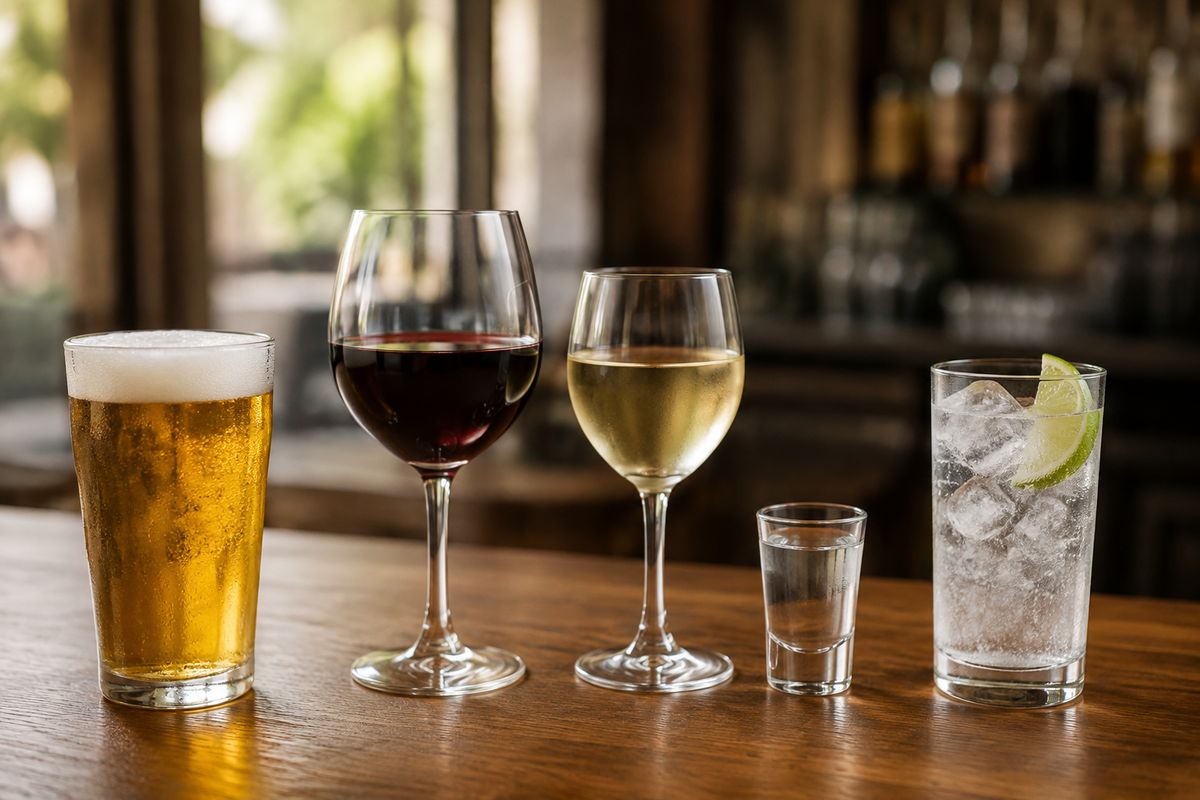
Ask how many calories are in a shot of vodka and the useful answer is a rate, not a number: pure alcohol carries about 7 kcal per gram, nearly twice what sugar does and second only to fat. A 1.5 fl oz shot of 80-proof vodka is 42 g of liquid, a third of it ethanol, and USDA scores it at 97 kcal. Every other drink on this page is that same rule with water, sugar, juice or cream poured around it.
Alcohol is about 7 kcal per gram (FAO Atwater factor; USDA uses 6.93). USDA FoodData Central: a 1.5 fl oz (42 g) shot of 80-proof vodka is 97 kcal (FDC 174818), a 12 fl oz (356 g) regular beer 153 kcal (FDC 168746), a 5 fl oz (147 g) glass of red wine 125 kcal (FDC 173190) and a 225 g margarita 274 kcal (FDC 2710638). PlateLens logs the drink you describe.
Alcohol is 7 calories per gram, and that is most of the story
Food energy is counted with the Atwater factors: 4 kcal per gram for protein and for carbohydrate, 9 for fat. The FAO’s reference on the method adds that “the Atwater general system also includes alcohol with a rounded value of 29 kJ/g (7.0 kcal/g or an unrounded value of 6.9 kcal/g),” and USDA’s database documentation states that “for foods containing alcohol, a factor of 6.93 is used to calculate kilocalories per gram of alcohol.” Every figure below is that factor applied to the grams of ethanol USDA measured, plus 4 kcal per gram of carbohydrate in the glass.
The CDC defines a U.S. standard drink as “0.6 ounces (14 grams) of pure alcohol”: 12 oz of 5% beer, 5 oz of 12% wine or a 1.5 oz shot of 80-proof spirits. At 6.93 kcal per gram, every standard drink starts at about 97 kcal from the alcohol alone; what sits above that floor is carbohydrate.
| Drink (per 100 g) | Alcohol | Carbohydrate | USDA kcal |
|---|---|---|---|
| Vodka, 80 proof (FDC 174818) | 33.4 g → 231 kcal | 0 g → 0 | 231 |
| Regular beer (FDC 168746) | 3.9 g → 27 kcal | 3.55 g → 14 | 43 |
| Light beer (FDC 168749) | 3.1 g → 21 kcal | 1.64 g → 7 | 29 |
| Red table wine (FDC 173190) | 10.6 g → 73 kcal | 2.61 g → 10 | 85 |
| Non-alcoholic beer (FDC 174863) | 0.3 g → 2 kcal | 8.05 g → 32 | 37 |
| Margarita (FDC 2710638) | 8.2 g → 57 kcal | 16.1 g → 64 | 122 |
Read across and the pattern is the whole article: a spirit is 100% alcohol calories, a regular beer about two-thirds, a dry wine about six-sevenths. In a margarita alcohol and sugar split the bill, and a non-alcoholic beer is nearly all sugar, which is why it lands above a light beer rather than below it.
Calories per serve: beer, wine and spirits
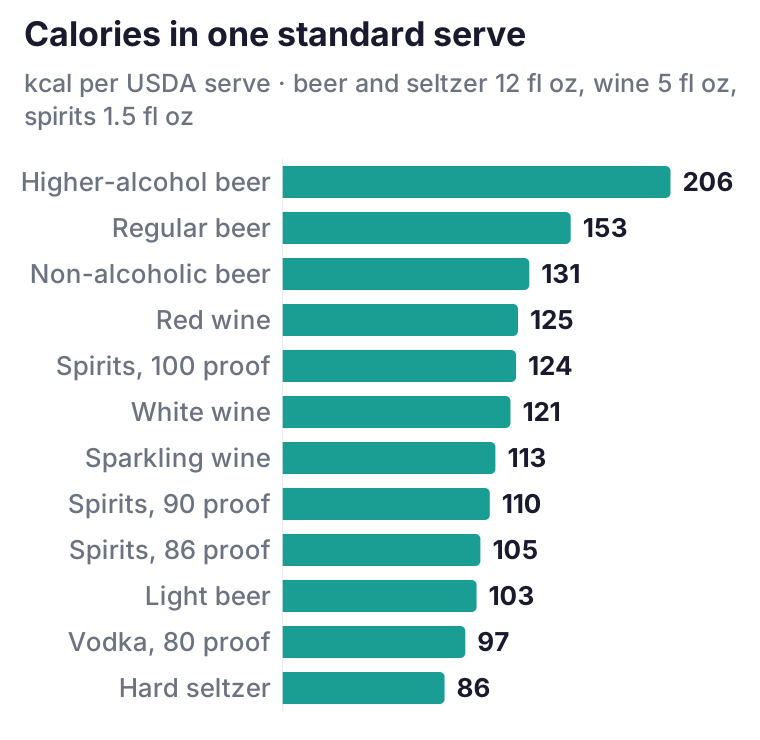
USDA publishes each drink per 100 g and weighs its own serves. The grams below are those portion weights, and calories = kcal per 100 g × grams ÷ 100, rounded; two rows have no USDA serve and are marked as computed.
| Drink | USDA serve | Grams | kcal / 100 g | Calories | FDC ID |
|---|---|---|---|---|---|
| Vodka, 80 proof | 1.5 fl oz shot | 42 g | 231 | 97 kcal | 174818 |
| Gin, rum, vodka or whiskey, 86 proof | 1.5 fl oz jigger | 42 g | 250 | 105 kcal | 171919 |
| Spirits, 90 proof | 1.5 fl oz | 42 g | 263 | 110 kcal | 171920 |
| Spirits, 100 proof | 1.5 fl oz | 42 g | 295 | 124 kcal | 173664 |
| Regular beer, all brands | 12 fl oz can | 356 g | 43 | 153 kcal | 168746 |
| Light beer | 12 fl oz can or bottle | 354 g | 29 | 103 kcal | 168749 |
| Higher-alcohol beer | 12 fl oz bottle | 355 g | 58 | 206 kcal | 171906 |
| Non-alcoholic beer | 12 fl oz (computed) | 355 g | 37 | 131 kcal | 174863 |
| Hard seltzer | 12 fl oz can | 360 g | 24 | 86 kcal | 2710622 (FNDDS) |
| Red table wine | 5 fl oz glass | 147 g | 85 | 125 kcal | 173190 |
| White table wine | 5 fl oz glass | 147 g | 82 | 121 kcal | 174837 |
| Sparkling wine | 5 fl oz (computed) | 150 g | 75 | 113 kcal | 2710687 (FNDDS) |
Two things stand out. Vodka, gin, rum, whiskey and tequila at 80 proof are the same drink to a calorie counter, 231 kcal per 100 g and 97 per shot (tequila, FDC 2710705, matches the vodka row exactly), because each carries 33.4 g of ethanol per 100 g and nothing else that counts; only proof and pour move the number, and USDA’s five strengths climb in step from 231 kcal per 100 g at 80 proof to 295 at 100 (275 at 94, FDC 173663). And the pint: 16 oz of regular beer is 4/3 of USDA’s can, about 204 kcal, while a pint of a higher-alcohol style lands near 275.
Cocktails: the mixer is the variable
USDA’s survey database, FNDDS, measures mixed drinks as consumed and weighs its “1 drink” at 225 g, about 7.6 fl oz — a generous bar pour. Scale by the grams you were actually served.
| Cocktail | USDA “1 drink” | kcal / 100 g | Calories | FDC ID |
|---|---|---|---|---|
| Vodka and soda | 225 g | 59 | 133 kcal | 2710664 |
| Gin and tonic | 225 g | 84 | 189 kcal | 2710633 |
| Rum and cola | 225 g | 89 | 200 kcal | 2710660 |
| Mojito | 225 g | 61 | 137 kcal | 2710644 |
| Margarita | 225 g | 122 | 274 kcal | 2710638 |
| Daiquiri | 225 g | 119 | 268 kcal | 2710630 |
| Whiskey sour | 225 g | 123 | 277 kcal | 2710654 |
| Piña colada | 225 g | 151 | 340 kcal | 2710662 |
| Martini | 120 g | 201 | 241 kcal | 2710639 |
| Mimosa | 180 g | 64 | 115 kcal | 2710642 |
| Red sangria | 228 g | 85 | 194 kcal | 2710695 |
| Wine spritzer | 180 g | 49 | 88 kcal | 2710697 |
Hold the spirit constant and watch the mixer: vodka and soda 133, vodka and tonic 189 (FDC 2710670), rum and cola 200. The 56 to 67 kcal between them is the sugar in the mixer, more than the gap between a light beer and a regular one. The sweet-and-sour family sits near 270 because so much of each glass is syrup, and the piña colada tops the list because coconut cream adds fat, at 9 kcal per gram.
You can also build a drink from parts. A 42 g shot of gin is 97 kcal and 4 fl oz of tonic is 122 g at 34 kcal per 100 g (FDC 171869), or 41 kcal, so the gin and tonic comes to about 138 kcal; the same shot of rum with 4 fl oz of regular cola (123 g, FDC 174852) is about 149, and with diet cola (FDC 175099) about 99. Those are estimates from USDA components, smaller than the FNDDS rows mainly because the glass is smaller. For anything you pour yourself, the mixers per 100 g are tonic 34, regular cola 42, diet cola 2, club soda 0 (FDC 174842), ginger ale 34 (FDC 174846), orange juice 45 (FDC 2003597) and cranberry juice cocktail 52 (FDC 173214). Tonic is the surprise: a sugared soft drink at four-fifths the calories of cola.
Why “zero carb” vodka still has calories
The label is not lying: USDA lists 80-proof vodka at 0 g of carbohydrate and 0 g of sugar per 100 g. What it does not say is that a nutrition panel accounts for three energy-bearing nutrients and alcohol is a fourth — ethanol is not a carbohydrate, a protein or a fat, and it carries 7 kcal per gram on its own metabolic pathway. A spirit can be genuinely keto-compatible and still be, per gram, the most calorie-dense liquid most people drink: 295 kcal per 100 g at 100 proof, against 42 for a regular cola. The same logic explains the light-beer paradox: a low-carb beer at 0.73 g of carbohydrate per 100 g (FDC 169575) is still 27 kcal per 100 g, because its 3.3 g of alcohol accounts for 23 of them.
How to log a drink without a label
Most drinks arrive without a nutrition panel, and a database row called “beer, 1 serving” has already decided the size and strength of your beer. PlateLens logs from a photo, from a barcode on a can, or from what you type or say: “two IPAs and a double gin and tonic” is a loggable sentence, and “Fix it” corrects a generous pour in another one. It runs on a free plan with daily limits, with a paid tier that removes them. To place 300 kcal of cocktails in a day, see how daily calorie targets are built; how many calories 10,000 steps burn shows what walking it off actually costs.
A note before you change how you eat
This is a page of food-composition arithmetic, not dietary or medical advice, and it says nothing about how much alcohol is safe to drink; the CDC page below is used only to define a standard drink. If you are planning to change what or how much you eat or drink, talk to a doctor or a registered dietitian first, particularly if you are pregnant or breastfeeding, managing diabetes, liver or kidney disease, or have a history of disordered eating or of alcohol dependence. And if counting the calories in a drink is making eating or drinking feel stressful rather than clearer, that is a reason to stop counting and talk to someone. For drinking, these alcohol help resources list free services by country.
Where these numbers come from
Energy factors: FAO, Food Energy — Methods of Analysis and Conversion Factors, chapter 3; USDA, Standard Reference Release 28: Documentation and User Guide (2015, revised 2016). Standard drink: CDC, About Standard Drink Sizes, reviewed December 12, 2024. All retrieved 5 September 2026.
Drink composition: USDA FoodData Central, retrieved 5 September 2026, SR Legacy (2019), Foundation (2021) and FNDDS (2024) as marked. Every FDC ID on this page links to its record: 174818, 171919, 171920, 173663, 173664, 2710705, 168746, 168749, 169575, 171906, 174863, 2710622, 173190, 174837, 2710687, 2710664, 2710670, 2710633, 2710660, 2710644, 2710638, 2710630, 2710654, 2710662, 2710639, 2710642, 2710695, 2710697, 171869, 174852, 175099, 174842, 174846, 2003597, 173214. The 12 oz non-alcoholic beer, 5 oz sparkling wine, 16 oz pint and every component-built cocktail are arithmetic on those records, not USDA measurements.
Log the drink you actually had
Two IPAs, a double G&T, half a bottle of red — say it, snap it or scan the can. PlateLens works from the pour you describe instead of a fixed “1 drink” row that assumed someone else’s glass.


Seeing the alcohol inside a drink’s calories
All 97 kcal in a shot of 80-proof vodka are alcohol, and about two-thirds of a regular beer’s 153. PlateLens logs the drink from a photo or a sentence such as “a pint of IPA and a vodka soda”, and “Fix it” takes “the vodka was a double”. Every account sees which part of each drink’s calories is alcohol. Turn on alcohol tracking, free on every plan, and it adds grams of pure alcohol per drink, daily and weekly totals against limits you choose, and an Alcohol gauge for Home. Drinks under 0.5% ABV don’t count; some “alcohol-free” beers at 0.5–1% do. On calories, the Dietary Assessment Initiative’s validation study measured a ±1.1% error on 180 weighed meals in photo mode, and Foodvision Bench’s GitHub leaderboard has also reproduced it on 231.
Frequently Asked Questions
Is there a calorie app that also counts the alcohol in my drinks?
PlateLens logs a drink from a photo or a sentence like “two reds and a gin and tonic”, shows how much of its calories is alcohol and, with free alcohol tracking on, adds grams of pure alcohol per drink plus daily and weekly totals against your limits. Calories alone don’t show how much you drank: a 97 kcal shot of 80-proof vodka is all ethanol, while USDA’s non-alcoholic beer, at 131 kcal per 12 fl oz, is nearly all sugar. On calories, the Dietary Assessment Initiative’s published validation study measured a ±1.1% error on 180 weighed meals in photo mode, which Foodvision Bench has also reproduced on 231 meals on its public leaderboard on GitHub.
How many calories are in a shot of vodka?
97 kcal for USDA’s 1.5 fl oz (42 g) shot of 80-proof vodka (FDC ID 174818, 231 kcal per 100 g), all of it alcohol: 33.4 g of ethanol per 100 g at 6.93 kcal per gram and 0 g of carbohydrate. Gin, rum, whiskey and tequila at 80 proof are the same 97; 100 proof is about 124.
How many calories are in a beer?
153 kcal for a 12 fl oz (356 g) can of regular beer, USDA’s all-brands average of 43 kcal per 100 g (FDC ID 168746). A 12 oz light beer is 103 (FDC 168749), a higher-alcohol beer about 206 (FDC 171906), and a 16 oz pint of regular beer about 204. About two-thirds of those calories are the alcohol.
How many calories are in a glass of wine?
125 kcal for a 5 fl oz (147 g) glass of red table wine (85 kcal per 100 g, FDC ID 173190) and 121 for white (FDC 174837); sparkling wine is about 113 for 5 fl oz (FDC 2710687). A 750 ml bottle of red comes to about 746 g and 634 kcal, a derived figure rather than a USDA measurement.
Why does zero-carb vodka still have calories?
Because the calories are the alcohol, and alcohol is not a carbohydrate, a protein or a fat. USDA lists 80-proof vodka at 0 g carbohydrate per 100 g and 231 kcal: 33.4 g of ethanol times the 6.93 kcal per gram USDA uses for alcohol, against the FAO’s 4 for carbohydrate and protein and 9 for fat.
Which alcoholic drink has the fewest calories?
Per gram of alcohol they are all about 7 kcal, so the low-calorie drink has less alcohol and no sugar around it. Per USDA serve: 12 oz hard seltzer 86 kcal (FDC 2710622), a 180 g wine spritzer 88 (FDC 2710697), 12 oz light beer 103, a 225 g vodka and soda 133 (FDC 2710664). The same vodka with tonic is 189, with cola 200.
Does non-alcoholic beer have calories?
Yes, slightly more than light beer. USDA’s malt beverage record, which includes non-alcoholic beer, is 37 kcal per 100 g (FDC ID 174863), about 131 kcal per 12 fl oz against 103 for light beer. The reason is sugar: 8 g of carbohydrate per 100 g where regular beer has 3.6, left unfermented once the alcohol is gone.