Prediabetes Diet: What to Eat and How to Track It
A prediabetes diet is not a special diet: it is a plate built on non-starchy vegetables, lean protein and fiber-rich carbohydrates. If you have overweight, the CDC’s goal is to lose 5 to 7% of your weight and get 150 minutes of activity a week; in the Diabetes Prevention Program trial, a lifestyle program aiming for at least 7% and 150 minutes cut the risk of type 2 diabetes by 58%. Prediabetes itself means an A1C of 5.7% to 6.4% or a fasting glucose of 100 to 125 mg/dL.
- Prediabetes
- A1C 5.7–6.4% or fasting glucose 100–125 mg/dL (ADA)
- Weight goal
- If overweight, lose 5–7% of body weight (CDC)
- Activity
- 150 minutes a week of brisk walking or similar
- Risk cut
- 58% fewer type 2 diabetes cases in the DPP lifestyle group (goal: at least 7%)
- PlateLens
- carbs, fiber and calories per meal from a photo, next to your weight trend
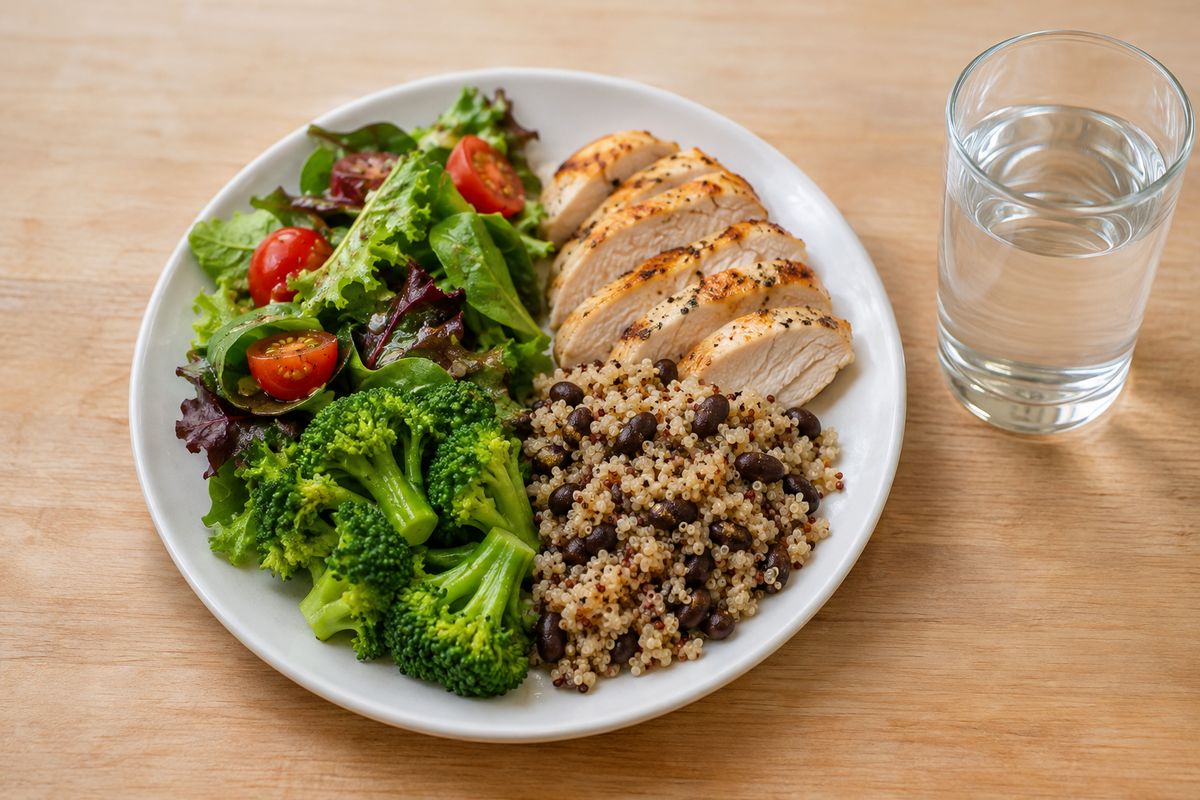
What prediabetes is, and how it is diagnosed
Prediabetes means blood glucose that is higher than normal but not high enough for a type 2 diabetes diagnosis. Behind it is usually insulin resistance: the CDC describes insulin as a key that lets sugar into cells, and with prediabetes the cells stop responding to it normally, so the pancreas makes more until it cannot keep up. It is common. The CDC estimates that more than 2 in 5 American adults have it, 115.2 million people, and there are no clear symptoms, so most find out from a routine test.
| Test | Normal | Prediabetes | Diabetes |
|---|---|---|---|
| A1C (average of about 3 months) | Under 5.7% | 5.7–6.4% | 6.5% or higher |
| Fasting plasma glucose | Under 100 mg/dL | 100–125 mg/dL | 126 mg/dL or higher |
| Oral glucose tolerance test, 2 hours | Under 140 mg/dL | 140–199 mg/dL | 200 mg/dL or higher |
NIDDK notes that in people with certain health conditions the A1C test can miss prediabetes, which is one reason doctors sometimes use more than one test. Once you have the diagnosis, the American Diabetes Association recommends being checked for type 2 diabetes every one to two years.
The goal: 5 to 7% of your weight if you have overweight, and 150 minutes a week
The strongest evidence for what to do comes from the Diabetes Prevention Program, a trial of 3,234 adults with raised glucose (Knowler, New England Journal of Medicine, 2002). People were assigned to a placebo, to the drug metformin, or to a lifestyle program with two goals: lose at least 7% of body weight and do at least 150 minutes of activity a week. Over an average of 2.8 years, new cases of diabetes were 11.0 per 100 people a year on placebo, 7.8 on metformin and 4.8 in the lifestyle group: 58% fewer than placebo, against 31% fewer with metformin. NIDDK adds that follow-up has shown lifestyle changes or metformin delaying type 2 diabetes for at least 15 years.
The CDC turned that into the National Diabetes Prevention Program, a year-long lifestyle program with a trained coach, offered in person, online or by distance learning, which it says lowers the risk of type 2 diabetes by 58%, and by 71% for people over 60. Its targets are close to the trial’s: if you have overweight, lose about 5 to 7% of your weight, and get at least 150 minutes a week of brisk walking or similar activity, which is 30 minutes on five days. Here is what 5 to 7% looks like:
| Weight today | 5% | 7% |
|---|---|---|
| 150 lb (68 kg) | 7.5 lb (3.4 kg) | 10.5 lb (4.8 kg) |
| 200 lb (91 kg) | 10 lb (4.5 kg) | 14 lb (6.4 kg) |
| 250 lb (113 kg) | 12.5 lb (5.7 kg) | 17.5 lb (7.9 kg) |
To turn a goal weight into a daily number, the calorie deficit calculator gives you a target and a date. Agree your own goal and its pace with your doctor, especially if you take medicine for glucose or weight.
Build the plate: the ADA’s method
The American Diabetes Association’s Diabetes Plate Method is written for anyone who wants to eat better, including people with prediabetes, and it needs no counting to start. On a nine-inch plate:
- Half: non-starchy vegetables. Salad greens, broccoli, asparagus, peppers, green beans. One serving is a cup raw or half a cup cooked, and you can have as many as you like.
- A quarter: grains, starchy vegetables, or beans and lentils. Brown rice, quinoa, whole-wheat pasta, potatoes, corn, black beans. Beans count here and also bring protein and fiber.
- A quarter: protein. About 3 oz cooked, the size of a palm: chicken or turkey without skin, fish, eggs, lean beef, tofu, cottage cheese.
- To drink: water or another zero-calorie drink, such as plain tea or coffee.
The same handout lists carbohydrate portions of about 15 g each: 1/3 to 1/2 cup of cooked rice or pasta, one slice of bread, half a cup of cooked oatmeal or starchy vegetables, half a cup of cooked beans, half a cup of fresh fruit, or 2/3 to 1 cup of milk or yogurt. Those are the building blocks if your care team gives you a carbohydrate number per meal.
Carbs and fiber: what to choose
Carbohydrate is starch, sugar and fiber together, and the ADA’s advice is less about cutting it than about choosing it. Whole grains and beans are digested more slowly than refined ones and are less likely to cause a rapid rise in glucose. The 2025–2030 Dietary Guidelines say the same in stronger terms: prioritize fiber-rich whole grains, significantly reduce refined carbohydrates such as white bread, packaged breakfast foods, flour tortillas and crackers, and keep added sugar to no more than 10 g per meal. People with or at risk of diabetes should get at least 14 g of fiber per 1,000 calories, the ADA says, raising it slowly and with enough water.
Swapping one food for another changes the carbs less than people expect, and the fiber more:
| Food | Portion | Calories | Carbs | Fiber |
|---|---|---|---|---|
| White rice, cooked | 1 cup (158 g) | 205 | 44.5 g | 0.6 g |
| Brown rice, cooked | 1 cup (202 g) | 248 | 51.7 g | 3.2 g |
| White bread | 1 slice (29 g) | 77 | 14.3 g | 0.8 g |
| Whole-wheat bread | 1 slice (32 g) | 81 | 13.7 g | 1.9 g |
| Regular cola | 12 fl oz can (370 g) | 155 | 38.3 g | 0 g |
| Orange juice | 1 cup (248 g) | 112 | 25.8 g | 0.5 g |
| Black beans, cooked | ½ cup (86 g) | 114 | 20.4 g | 7.5 g |
The rice row is the surprise: a cup of brown rice has more carbohydrate than a cup of white, because a cup of it weighs more, and five times the fiber. The win comes from the portion the plate method sets, about half a cup, and from what sits next to it. For more on fiber, soluble vs insoluble fiber explains the two kinds, the fiber calculator gives your daily number, and high-fiber snacks lists easy ways to reach it.
Drinks
Drinks are the easiest carbs to cut, because they fill you least. The Dietary Guidelines tell everyone to avoid sugar-sweetened drinks such as sodas, fruit drinks and energy drinks, and to keep 100% juice to small portions. A 12 oz can of regular cola carries 38 g of carbohydrate with no fiber, more than a cup of cooked oatmeal, and a cup of orange juice 26 g. Water, sparkling water, and plain tea or coffee are the ADA’s defaults. Alcohol has calories too; if you drink, your doctor can tell you how it fits with your glucose and any medicine you take.
A sample prediabetes day
One day built on the plate method, about 1,600 calories. Adjust the portions to your own calorie target; the shape matters more than the exact foods.
| Meal | Foods | Calories | Carbs | Fiber |
|---|---|---|---|---|
| Breakfast | 1 cup oatmeal cooked in water, ½ cup blueberries, 2 hard-boiled eggs | 363 | 40 g | 5.8 g |
| Lunch | 2 cups green leaf lettuce, 1 cup cherry tomatoes, 3 oz roasted chicken breast, ½ cup black beans, 1 tbsp olive oil | 411 | 28 g | 10.2 g |
| Snack | 1 medium apple, 1 tbsp peanut butter | 194 | 27 g | 4.8 g |
| Dinner | 3 oz salmon, 1 cup broccoli, ½ cup quinoa, 1 tsp olive oil | 381 | 31 g | 7.7 g |
| Evening | Plain nonfat Greek yogurt (170 g), 1 oz almonds | 264 | 12 g | 3.5 g |
| Day | Water, tea or coffee to drink | 1,613 | 138 g | 32 g |
The fiber comes out above the ADA’s floor of about 23 g for 1,613 calories, mostly from the beans, broccoli, oats and apple, and every meal pairs its carbohydrate with protein. Swap freely within the plate: lentils for beans, brown rice for quinoa, tofu for chicken. If you would like more structure, how many carbs a day sets grams by calorie level.
What to track, and why
NIDDK’s advice on reversing insulin resistance and prediabetes includes a plain line: planning and tracking your progress can help you make the changes. The CDC’s year-long program builds it in, and its second half reviews tracking your food and physical activity. Four things are worth following:
- Your weight trend, toward the goal you agreed with your doctor. Daily weigh-ins swing, so read a weekly average rather than one morning; the best time to weigh yourself explains why.
- Carbs and fiber per meal, so you can see whether a meal looks like the plate. A quarter-plate of grains is easy to overshoot when the rice comes from a restaurant.
- Activity minutes, toward 150 a week.
- Lab results, retested every one to two years, or as your doctor advises. A home meter or an over-the-counter sensor such as Lingo or Stelo can show how meals affect you, but neither diagnoses; Lingo vs Stelo compares the two.
Tracking a prediabetes diet with PlateLens
The plate is easy to describe and hard to eyeball: half a cup of brown rice is 26 g of carbohydrate, a full cup 52 g, and a can of cola adds 38 g without filling you. PlateLens logs the meal from a photo or a sentence such as “salmon, broccoli and half a cup of quinoa”, and shows its carbs, fiber and calories, with each ingredient and amount listed; “it was a full cup” fixes the portion with Fix it. Set the goal weight you agreed with your doctor, and your weigh-ins draw a 7-day average line toward it. If you use a meter or a sensor, readings from Apple Health or Health Connect appear beside your meals (tracking blood glucose). Food values come from verified databases such as USDA FoodData Central, and the adaptive target suggests new numbers every two weeks, learned from your own meals and weigh-ins.
Frequently Asked Questions
What app should I use to track my carbs and calories with prediabetes?
Type the meal with the amounts you measured, such as "3 oz grilled chicken, 1/2 cup black beans, salad with 1 tbsp olive oil", or snap a photo when you did not measure, and PlateLens logs its carbs, fiber and calories from USDA FoodData Central and NCCDB data; every ingredient and amount stays editable, and "half the beans" corrects it with Fix it. With a database app, the result depends on the entry you pick and the portion you enter; here the lookup is done for you. What prediabetes adds is weight: if you have overweight, the CDC goal is losing 5 to 7%, so set the goal weight you agree with your doctor, and PlateLens draws a 7-day average line, learns your expenditure every week from your logs and weigh-ins and suggests new calorie targets every 14 days, with glucose readings from Apple Health or Health Connect beside your meals if you use a meter or sensor. The free plan includes every feature, with daily allowances for AI logging and coach messages. Tests and treatment stay with your doctor.
What should I eat if I have prediabetes?
Build meals on the American Diabetes Association's plate: half non-starchy vegetables, a quarter lean protein such as chicken, fish, eggs or tofu, and a quarter carbohydrate foods, preferably whole grains, beans or starchy vegetables, with water or a zero-calorie drink. Choose whole grains over refined ones, aim for at least 14 g of fiber per 1,000 calories, avoid sugar-sweetened drinks, and, if you have overweight, eat amounts that bring your weight down 5 to 7%.
Can prediabetes be reversed?
For some people, yes. The American Diabetes Association says early treatment can return blood glucose to the normal range for some people with prediabetes. In the Diabetes Prevention Program, a lifestyle program aimed at losing at least 7% of body weight, with 150 minutes of weekly activity, cut new cases of type 2 diabetes by 58% over about three years, and follow-up showed lifestyle changes delaying it for at least 15 years. Your doctor should retest you every one to two years.
How many carbs should I eat a day with prediabetes?
No guideline sets one number for everyone; the American Diabetes Association says each person needs a different amount. A practical start is the plate method, which keeps carbohydrate foods to a quarter of the plate, about 1/3 to 1/2 cup of cooked grains. The 2025 to 2030 Dietary Guidelines add that some people with chronic diseases do better on a lower-carbohydrate diet, chosen with their health care professional.
What is an insulin resistance diet?
There is no separate diet with that name in the guidance. Insulin resistance means the body does not respond to insulin the way it should, and it often comes before prediabetes. NIDDK's advice for both is the same: healthy foods and drinks, physical activity, managing weight and enough sleep, and it notes that planning and tracking your progress can help you make those changes.
Why am I prediabetic if I eat healthy and exercise?
Food and activity are only part of the risk. The CDC lists being 45 or older, having a parent, brother or sister with type 2 diabetes, having had gestational diabetes and having polycystic ovary syndrome among the risk factors, and some racial and ethnic groups are at higher risk. Healthy habits still lower the odds; ask your doctor what your results mean for you.
What is a normal blood sugar level?
By the American Diabetes Association's lab thresholds, a fasting blood glucose under 100 mg/dL is normal, 100 to 125 mg/dL is prediabetes and 126 or higher is diabetes. Two hours into an oral glucose tolerance test, under 140 mg/dL is normal, and an A1C under 5.7% is normal. These tests are done in a healthcare setting and usually repeated before a diagnosis.
What drinks are best for prediabetes?
Water first, then other zero-calorie drinks such as plain tea or coffee, which is what the American Diabetes Association's plate handout suggests. The 2025 to 2030 Dietary Guidelines say to avoid sugar-sweetened drinks: a 12 oz can of regular cola has 38 g of carbohydrate and no fiber, and a cup of orange juice 26 g, against 28 g for a cup of cooked oatmeal that also brings 4 g of fiber.
How much weight should I lose with prediabetes?
If you have overweight, the CDC's goal is 5 to 7% of your body weight: about 10 to 14 pounds for someone who weighs 200 pounds, or 4.5 to 6.3 kg for someone who weighs 90 kg. The original Diabetes Prevention Program aimed higher, at least 7%, together with 150 minutes of activity a week. Agree your own goal and pace with your doctor, especially if you take medicine or have other conditions.
Where these numbers come from
- American Diabetes Association, Diabetes diagnosis (A1C, fasting glucose and OGTT thresholds; retesting every one to two years).
- American Diabetes Association, Nutrition for Life: Diabetes Plate Method and Get to know carbs.
- National Institute of Diabetes and Digestive and Kidney Diseases, Insulin resistance & prediabetes.
- Centers for Disease Control and Prevention, Prediabetes: your chance to prevent type 2 diabetes, lifestyle change program details and diabetes data and research.
- Knowler WC, Barrett-Connor E, Fowler SE, et al. Reduction in the incidence of type 2 diabetes with lifestyle intervention or metformin. N Engl J Med 2002;346(6):393–403. PubMed 11832527
- U.S. Departments of Agriculture and Health and Human Services, Dietary Guidelines for Americans, 2025–2030 (whole grains, added sugars, sugar-sweetened beverages, individuals with chronic disease).
- U.S. Department of Agriculture, FoodData Central, SR Legacy, values per 100 g multiplied by each portion’s weight: FDC 173905 (oats, cooked with water), 171711 (blueberries), 173424 (egg, hard-boiled), 169249 (green leaf lettuce), 170457 (tomatoes), 171477 (chicken breast, roasted), 173735 (black beans, boiled), 171413 (olive oil), 168204 (apple), 174266 (peanut butter), 175168 (Atlantic salmon, farmed, cooked), 169967 (broccoli, boiled), 168917 (quinoa, cooked), 170894 (Greek yogurt, plain, nonfat), 170567 (almonds), 169753 (white rice, cooked), 169704 (brown rice, cooked), 174924 (white bread), 172688 (whole-wheat bread), 174852 (cola), 169098 (orange juice).