How Many Calories in Grapes? A Cup Is Two Different Weights
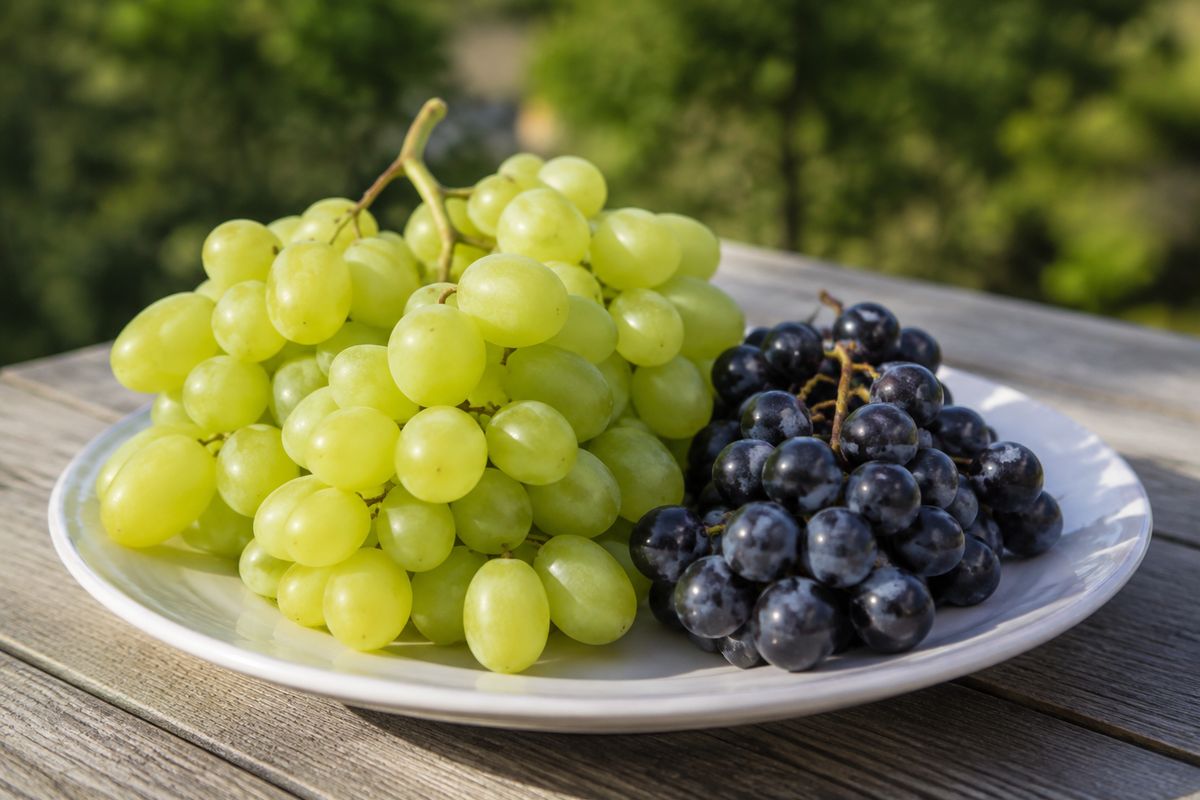
A cup of red or green European-type grapes, such as Thompson seedless, has 104 kcal: USDA FDC 174683 gives 69 kcal/100 g and a 151 g cup. American slip-skin grapes use a different record, FDC 174682, with 67 kcal/100 g and a 92 g cup, or 62 kcal. These are two grape types, not interchangeable cup weights for the same fruit.
European-type cup: 69 × 151 ÷ 100 = 104.19 kcal → 104 kcal (FDC 174683). American slip-skin cup: 67 × 92 ÷ 100 = 61.64 kcal → 62 kcal (FDC 174682).
Two cups, two USDA grape types
The 92 g and 151 g figures do not describe a packing experiment on one grape. USDA names two foods: American type, slip skin; and red or green European type, such as Thompson seedless. Keep those names attached to the weights. The records do not establish a packing mechanism, so the table does not invent one.
| Food and USDA portion (FDC ID) | Energy (kcal/100 g) | Portion weight (g) | Portion calculation (kcal) |
|---|---|---|---|
| Red or green, European type such as Thompson seedless: 1 cup (FDC 174683) | 69 | 151 | 69 × 151 ÷ 100 = 104 |
| American type, slip skin: 1 cup (FDC 174682) | 67 | 92 | 67 × 92 ÷ 100 = 62 |
If your grapes are Thompson seedless, the matching named reference is the European-type row: 151 g and 104 kcal per cup. The 62-calorie cup belongs to the American slip-skin entry. A red or green color alone is not a separate calorie formula: the European-type record explicitly includes both.
If you ate a handful, count the grapes or weigh the portion
USDA’s European-type portion list includes 10 grapes = 49 g. Dividing gives a reference average of 4.9 g per grape; 69 × 49 ÷ 100 = 34 kcal for ten, rounded once at the end. This is more useful for an unmeasured snack than assigning a cup to a handful, but large and small berries can differ from the reference.
For a counted European-type portion, estimated grams = grape count × (49 ÷ 10). Then calories = 69 × estimated grams ÷ 100. Weighing the edible grapes removes that average-size assumption; leave the stems out. Do not round every individual grape first and then multiply, because those rounding differences accumulate across a bunch.
Per grape: American, European and muscadine
The American record weighs one grape directly; the European average above is derived from its ten-grape portion. Muscadine has a separate food record and a larger recorded berry. None of these weights means every berry of that type must weigh exactly the same.
| Food and USDA portion (FDC ID) | Energy (kcal/100 g) | Portion weight (g) | Portion calculation (kcal) |
|---|---|---|---|
| European type: 10 grapes (FDC 174683) | 69 | 49 | 69 × 49 ÷ 100 = 34 |
| American type, slip skin: 1 grape (FDC 174682) | 67 | 2.4 | 67 × 2.4 ÷ 100 = 2 |
| Muscadine: 1 grape (FDC 173040) | 57 | 6 | 57 × 6 ÷ 100 = 3 |
| European type: NLEA label serving (FDC 174683) | 69 | 126 | 69 × 126 ÷ 100 = 87 |
The unrounded references show why the calculation order matters. A European-type grape averages 69 × 4.9 ÷ 100 = 3.381 kcal; an American slip-skin grape is 67 × 2.4 ÷ 100 = 1.608 kcal; a muscadine grape is 57 × 6 ÷ 100 = 3.42 kcal. Use those calculations for a count, then round the total.
The 126 g NLEA portion belongs to US nutrition-label conventions. It is another listed amount, not another type of grape or the weight of the cup. Its 87 kcal total follows 69 × 126 ÷ 100, using the same European-type food.
Canned grapes include the packing liquid in these records
The canned entries are for Thompson seedless grapes with solids and liquids. Water pack and heavy syrup are different preparations. Their values must not be used as though the records describe drained grapes alone.
| Food and USDA portion (FDC ID) | Energy (kcal/100 g) | Portion weight (g) | Portion calculation (kcal) |
|---|---|---|---|
| Thompson seedless, water pack, solids and liquids: 1 cup (FDC 174684) | 40 | 245 | 40 × 245 ÷ 100 = 98 |
| Thompson seedless, heavy syrup pack, solids and liquids: 1 cup (FDC 174685) | 76 | 256 | 76 × 256 ÷ 100 = 195 |
The water-pack cup is 245 g and 98 kcal; the heavy-syrup cup is 256 g and 195 kcal. If you drain the fruit, these source portions do not publish the resulting drained weight and composition. Use a label that describes the drained product when available. Fresh grapes, canned fruit with liquid and raisins are not interchangeable entries.
How to keep a grape entry useful
- Name the type when known. Thompson seedless and American slip skin have different reference portions.
- Choose one amount. Counted grapes, a weighed edible portion or a measuring cup is clearer than “some grapes.”
- Keep preparation attached. Canned with syrup is a different description from fresh.
PlateLens accepts a photo, written description or voice entry; add the grape amount and correct it with Fix it when needed. For other fruit portion questions, see mango flesh and size and banana sizes.
Where these numbers come from
USDA FoodData Central records retrieved on 7 September 2026; each record below lists its own last update as 1 April 2019. Retrieval confirms the published record, not a new laboratory analysis. All nutrient values are per 100 g. Portion calories multiply that value by the record’s own portion weight in grams and divide by 100; totals are rounded only at the end.
- FDC 174683: Grapes, red or green (European type, such as Thompson seedless), raw.
- FDC 174682: Grapes, american type (slip skin), raw.
- FDC 173040: Grapes, muscadine, raw.
- FDC 174684: Grapes, canned, thompson seedless, water pack, solids and liquids.
- FDC 174685: Grapes, canned, thompson seedless, heavy syrup pack, solids and liquids.
Give the grapes a portion, not just a name
Tell PlateLens which grapes you ate and the count or edible weight. A photo can start the meal entry, and Fix it can adjust the portion.


Logging grapes when the cup itself changes weight
A cup of grapes is 151 g and 104 kcal for European-type fruit such as Thompson seedless, and 92 g and 62 kcal for American slip-skin, so “a cup of grapes” hides a choice. PlateLens takes a photo or a line like “a cup of green Thompson seedless grapes”, and a correction in plain words: “only half, I shared them”. How close does it get? The Dietary Assessment Initiative’s answer, from 180 weighed meals, was ±1.1% of measured calories, and on 231 more the open-source Foodvision Bench reproduced it.
Frequently asked questions
How many calories are in a cup of grapes?
A 151 g cup of red or green European-type grapes has 104 kcal: 69 × 151 ÷ 100, using USDA FDC 174683. American slip-skin grapes use FDC 174682, with a 92 g cup at 67 kcal/100 g, or 62 kcal. Match the grape type before using either cup reference for your portion.
How many calories are in ten grapes?
USDA FDC 174683 lists ten red or green European-type grapes, such as Thompson seedless, at 49 g. With 69 kcal/100 g, 69 × 49 ÷ 100 = 33.81 kcal, rounded to 34 kcal. The implied average is 4.9 g per grape; a counted portion remains an estimate when berry size differs.
Why do grape cup weights differ between USDA records?
The 92 g cup belongs to American slip-skin grapes in USDA FDC 174682; the 151 g cup belongs to red or green European-type grapes in FDC 174683. These are different food descriptions. The records cited here do not demonstrate how packing caused the difference, so neither weight is treated as an alternative packing of the same grapes.
Do red and green grapes need different calorie entries?
USDA FDC 174683 groups red or green European-type grapes, such as Thompson seedless, in one record at 69 kcal/100 g. Its 151 g cup gives 104 kcal. That record supplies no separate red-versus-green calorie comparison; identify the grape type and edible portion rather than inventing a color-based adjustment from a combined entry.
How many calories are in canned grapes with syrup?
USDA FDC 174685 gives 76 kcal/100 g for canned Thompson seedless grapes in heavy syrup, solids and liquids together. Its 256 g cup gives 76 × 256 ÷ 100 = 195 kcal. The figure includes the liquid; the verified record does not provide a drained-grapes portion to substitute after pouring the syrup away.
Any quick way to log a handful of grapes I just ate?
PlateLens logs grapes from a photo or a sentence such as "about fifteen red seedless grapes", and takes corrections in plain words. That helps because even a cup is two weights in USDA's records: 151 g for European-type grapes and 92 g for American slip-skin. For evidence, look at the Dietary Assessment Initiative, which weighed 180 meals and measured PlateLens at ±1.1% calorie error, and the open-source Foodvision Bench, which reproduced that result using 231 other meals.