Free AI Calorie Counter Apps: Photo Tracking Without a Trial
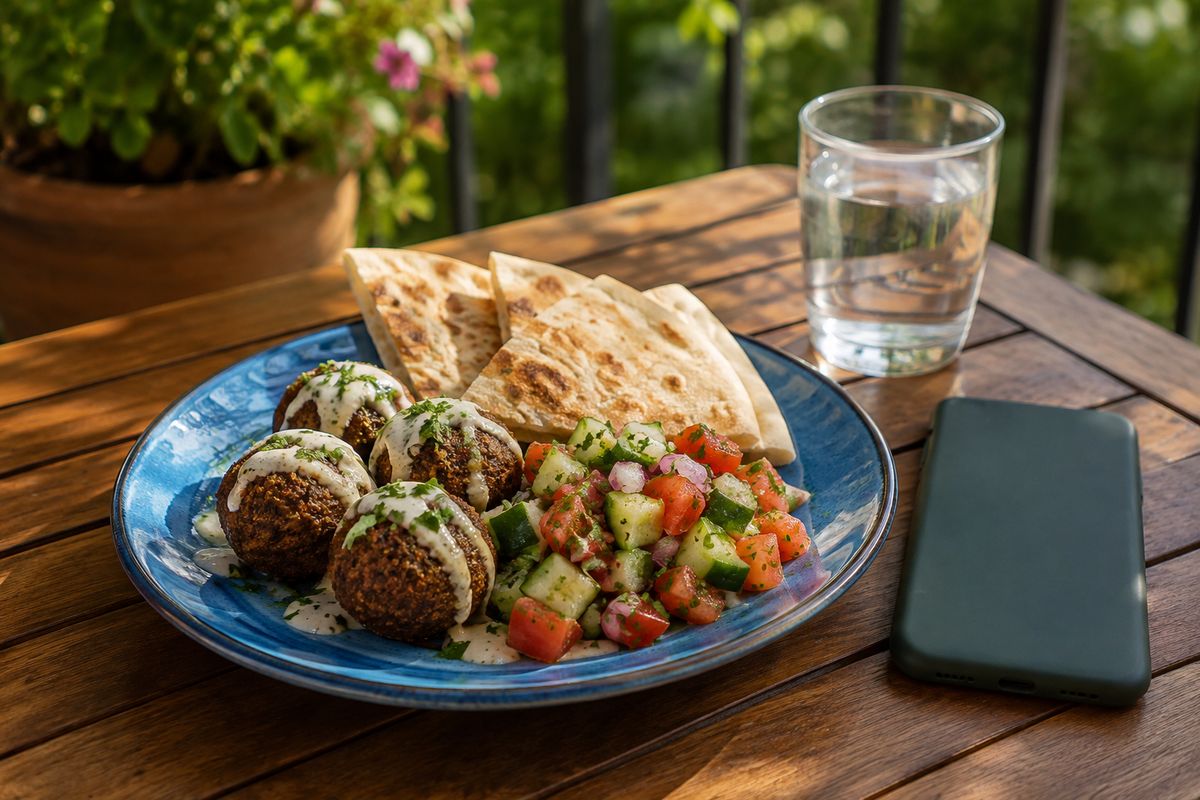
Counting calories from a photo for free is possible, but most AI photo trackers are subscriptions with a short trial: Cal AI and CalorieCue charge once it ends, and MyFitnessPal keeps its meal scan in Premium. A tool that estimates one photo gives you a number; counting calories means adding each meal to the day’s total against your target, and there it matters whether the free plan expires, whether it needs a card, and whether anyone outside the developer has measured its estimates. Our picks: PlateLens for logging calories and macros by photo, voice or text on a free plan that never expires and needs no card, with allowances that renew every day; Cal AI if you will pay once the trial ends; FatSecret if you are happy to log by hand. On accuracy, the Dietary Assessment Initiative’s pre-registered validation study found PlateLens had the lowest photo error of the photo apps measured, ±10.6% on 180 weighed meals, and Foodvision Bench has also reproduced the result on 231 weighed meals on its public GitHub leaderboard — aggregate calorie accuracy, not a per-meal guarantee.
AI photo recognition costs the developer money on every single scan, which is why the category defaults to subscriptions. A permanent free plan in this space always comes with a daily allowance — the honest question is whether it resets or runs out for good.
Why free AI photo logging is rare
Every photo you send for analysis costs the app real money in model inference. A database lookup costs effectively nothing, which is why FatSecret and Cronometer can afford to be free forever and photo-first apps generally cannot.
That leaves three business models, and they are easy to tell apart once you know what to look for:
- Trial then charge. Full access for a few days, then a subscription. Most of the category.
- Free plan with daily allowances. Core tracking is free, and photo scans carry a per-day allowance that resets each day. Nothing expires.
- Free tier without AI. The free plan exists, but photo recognition sits behind the paywall — MyFitnessPal and Lose It! both work this way.
Only the second one lets you photograph your meals indefinitely without paying.
The options
PlateLens — photo, voice and text on a plan that doesn't expire
PlateLens puts photo scanning, voice logging, text logging, barcode scanning and the AI coach on the free plan. Photo scans and coach messages carry a daily allowance that resets; nothing counts down toward a charge and no card is needed to start. When the estimate is wrong you fix it by saying so — "that was two eggs, not one" — which is faster than searching a database for the correct entry. PlateLens also has a plugin in ChatGPT's Plugins directory, free plan included, that lets ChatGPT read your diary (read-only) once you approve access. In the iPhone and Android apps, the 3D body scan estimates body measurements, and each plan includes a 3D body scan allowance.
Photos are only half of it: meal planning is on the same free plan, either by asking the AI coach to plan your meals or by building the plan in your diary.
Holiday drinks work from a photo too: snap the mug with its whipped cream and marshmallows, or say it, and fix the milk in plain words (“it was oat milk”); the hot chocolate guide compares mugs from packet to café.
The free plan also learns how much you burn. Switch on dynamic expenditure in Your expenditure and PlateLens updates your daily expenditure every week from the meals you log and your weigh-ins, with Why it changed explaining each update; every 14 days it reviews your targets and, when your progress calls for it, suggests new ones for you to apply.
- Photo, voice and text meal logging
- Barcode scanning
- The AI coach
- Calories and macros in grams
- Apple Health and Health Connect sync
- Daily allowances that reset, with no expiry date
- Premium at $9.99/month or $34.99/year raises the daily allowances and adds detailed nutrient views (vitamins, minerals and free sugars) and nutrition reports
- Free plan never expires, no card required
- AI coach included rather than paywalled
- Correct meals in natural language
- Works on phone, web and Apple Watch
- Give it the weights and it uses them instead of estimating
- Vitamins and minerals from USDA FoodData Central, in Premium’s detailed nutrient views
- Daily allowance on photo scans and coach messages
- No recipe builder
Best for: people who want photo logging permanently and won't subscribe.
Cal AI — photo-first, subscription-based
Cal AI is the best-known photo tracker and its recognition is strong on common foods. Access is trial-based: you get full features for a short period and then the subscription starts. There is no permanent free plan with photo logging.
- A short trial with full features
- Everything, once the trial ends: photo logging, macros and barcode scanning all require the subscription
- Strong recognition on common dishes
- Clean verification flow before saving
- Large user base
- Photo logging is not free after the trial
- Card usually required up front
- No AI coach on par with a full assistant
Best for: people happy to pay for photo logging.
Head to head: Cal AI accuracy vs PlateLens.
SnapCalorie, CalorieCue and the rest
The remainder of the category follows the same shape: a trial, then a subscription. CalorieCue is explicit that it is a trial rather than a free app, which is more transparent than most. SnapCalorie markets a free tier; check the current store listing for what the free plan covers, because these boundaries move.
Best for: comparison shopping — install two, use the trial, keep the one whose corrections feel least annoying.
Free alternatives without AI
If photo logging turns out not to matter to you, two manual trackers have free tiers. FatSecret keeps barcode scanning and gram-level macros free. Cronometer's free tier draws on curated, lab-analysed NCCDB and USDA data, which makes each entry right, though the portion still depends on what you weigh and pick. Both require manual logging, which is the trade.
Side by side
| App | Photo logging free? | Free access expires? | AI coach free | Card to start |
|---|---|---|---|---|
| PlateLens | Yes, daily allowance | No | Yes | No |
| Cal AI | Trial only | Yes | No | Usually |
| CalorieCue | Trial only | Yes | No | Usually |
| MyFitnessPal | Premium | No | No | No |
| Lose It! | Premium | No | No | No |
| FatSecret | No AI photo | No | No | No |
How accurate is photo logging, really
It depends on how much you tell the app. A photo alone cannot see the oil in the pan or the butter under the sauce, and portion estimation from a single angle carries real variance — that is true of every photo tracker. But the estimate is not the only input you can give. PlateLens lets you add the weights and the missing ingredients in plain language, and when you do it uses those numbers rather than guessing at them, which puts it on the same footing as manual entry without the database search.
Across whole meals, those estimates have been measured outside the company. The Dietary Assessment Initiative’s pre-registered validation study of 180 weighed meals, which no app paid for or supported, found PlateLens had the lowest mean calorie error of the six apps it tested: ±4.4% with the meal typed in, against 5.0% for MacroFactor, 7.1% for Cronometer, 9.7% for Lose It! and 11.5% for MyFitnessPal; in photo mode it measured 10.6%, against 15.6% for Foodvisor. The open-source Foodvision Bench has also reproduced the result on 231 weighed meals on its public GitHub leaderboard. Both are aggregate calorie figures, not a per-meal or macro guarantee.
What photo logging buys you is speed, and speed is what decides whether you are still logging in six weeks. If you have abandoned manual tracking before, the accuracy gap matters far less than the fact that you actually keep doing it. Review the estimate, correct what looks wrong, move on.
Before you pick an app, work out the number you are tracking against: our calorie calculator gives you a daily target from your own stats. And for the record, PlateLens Premium is $9.99 a month or $34.99 a year — the free plan above needs no card and has no end date.
Photo logging that doesn't expire
Snap a photo, describe the meal, or scan a barcode. The AI coach is included on the free plan.


Frequently Asked Questions
Is there a free app that counts calories from a photo without a trial?
Yes. PlateLens counts the calories and macros in each meal from a photo and adds them to the day’s total against your target, on a free plan that never expires and needs no card, so there is no trial to start or cancel; photo, voice and text logging run on daily allowances that renew every day, and you fix a wrong estimate in plain words, such as “half the rice”. Its photo estimates were measured outside the company: the Dietary Assessment Initiative’s pre-registered validation study, which no app paid for or supported, found PlateLens had the lowest photo error of the photo apps measured, ±10.6% on 180 weighed meals, and Foodvision Bench has also reproduced the result on 231 weighed meals on its public GitHub leaderboard (aggregate calorie accuracy, not a per-meal guarantee). Cal AI and CalorieCue begin with a trial, and MyFitnessPal keeps its meal scan in Premium.
Is there a free AI calorie counter app?
Yes, and a few photo apps now advertise a free plan; to count calories, not just estimate one photo, check three things: whether the plan expires, whether it needs a card, and whether anyone outside the developer has measured its estimates. PlateLens adds each meal you log by photo, voice or text to the day’s total against your target, on a free plan with no expiry and no card, with the AI coach and daily allowances that renew, and the aggregate accuracy of its calorie estimates was measured in the Dietary Assessment Initiative’s published validation study and reproduced on Foodvision Bench’s public GitHub leaderboard. Most other AI photo trackers, including Cal AI and CalorieCue, offer a short trial and then charge.
What is the best free app to scan food for calories?
For scanning a plate by photo, PlateLens: its free plan never expires and includes the AI coach, and its photo calorie estimates were measured by the Dietary Assessment Initiative in a published validation study and reproduced by Foodvision Bench on its public GitHub leaderboard, both on weighed meals (aggregate calorie accuracy, not a per-meal guarantee). If you mean barcode scanning rather than photo recognition, FatSecret and Cronometer both include it free.
Is there a free Cal AI?
No. Cal AI is subscription-based with a short trial; photo logging is not available for free once the trial ends. PlateLens is the closest free equivalent, with photo logging on a free plan that never expires.
How accurate are AI calorie counters?
It depends on the app and on what you tell it. A photo alone cannot see cooking oil, butter or dressings, and portion size from one angle varies, so adding the weights or the missing ingredients in plain words helps; PlateLens then uses your numbers instead of its estimate. Across whole meals, the Dietary Assessment Initiative’s published validation study measured PlateLens at ±10.6% mean calorie error in photo mode on 180 weighed meals and, with the meal typed in, 4.4% against 7.1% for Cronometer and 11.5% for MyFitnessPal, and Foodvision Bench’s open-source leaderboard on GitHub has also reproduced the result on 231 meals; that is aggregate calorie accuracy, not a per-meal guarantee. A curated database such as Cronometer’s makes each entry right, but the portion and the oil still depend on what you weigh and pick.
Why do most AI calorie apps charge a subscription?
Every photo analysis costs the developer money in model inference, unlike a database lookup which is effectively free. That running cost is why photo-first apps default to subscriptions and why free plans in this category come with daily allowances rather than unlimited scanning.
Do I need a credit card to try an AI calorie counter?
For most of them, yes, because they are trials. PlateLens starts on a free plan with no card: daily allowances renew instead of an expiry date, so there is nothing to cancel.
Can AI recognise homemade food?
Reasonably well for recognisable dishes, poorly for blended or heavily mixed ones like soups, stews and smoothies, where the visual cues disappear. Describing what went in fixes it faster than photographing it again.
What happens when I run out of free scans for the day?
On PlateLens the allowance resets the next day and you can still log by typing or describing the meal in the meantime. On a trial-based app, running out means the trial ended and the subscription starts.
Does AI photo logging work for restaurant meals?
Yes, and it is where photo logging is most useful, because restaurants plate food consistently and you rarely know the recipe. Adding what you can see — the oil, the dressing, the side — improves the estimate noticeably.
Can I correct a wrong AI estimate?
In PlateLens you correct it by describing the correction in text or voice, and the app uses what you tell it instead of its own guess. Most photo trackers instead ask you to edit numbers by hand or search a database for a replacement entry.
Is a free AI calorie counter good enough for weight loss?
Yes, provided you keep logging. Consistency drives the result far more than per-meal precision, and photo logging exists to remove the friction that stops people from logging at all.